Jews behind mayhem in Poland under Soviet occupation
Collection of articles taken from the Resistance site
Polish Truth.
Żydokomuna in Poland?
Wikipedia and other sites, as well as individuals, say
this term is derogatory and racist.
But what if the correlation between Communism and Jews is
true?
Did Poles have the right to assume that many Jews were
Communists?
Could Żydokomuna be a term used as a defense to avoid
dialogue and accountability?
In the Communist Party of Poland, those that were
"active" in certain areas mostly consisted of people of
Jewish descent, who, for example, were in so-called
technology (printing, courier communication, etc.), they
constituted approximately 75 percent of the members. This
incorporated into other various areas and lay at the root of
the fairly widespread functioning Jewish “myth” of being
"threats to Poland."
Can "myths" be true?
Given that Jews were at most 1 percent of citizens in
Poland at the time, the situation seems quite clear he
wrote: "In the light of the presented statistical data, the
thesis about the high participation of Jews and people of
Jewish origin in the leadership of the UB was formulated on
the basis of true premises and as such reflects the
historical fact."
Probably the most accurate data on an interesting topic
was given by Dr. Krzysztof Szwagrzyk in the "IPN Bulletin in
2005.
In the Communist Party of Poland, those that were
"active" in certain areas mostly consisted of people of
Jewish descent, who, for example, were in so-called
technology (printing, courier communication, etc.), they
constituted approximately 75 percent of the members.
This incorporated into other various areas and lay at the
root of the fairly widespread functioning Jewish “myth” of
being "threats to Poland."
But actually, much of this was factual.
Stereotypes were significantly strengthened during the
Soviet occupation in 1939–1941. Among Jews, Poles saw those
who supported the Soviets and benefited from Soviet orders,
agitators, and militiamen; traitors and collaborators.
Many Poles were murdered by Jews that collaborated with
the Communists. So sometimes "stereotypes" ring true and it
may be worth trying to accept instead of blaming on a form
of discrimination.
Here is an article that provides this information:
https://polishtruth.com/article/view/88/eastern-poland-collaboration-in-the-borderlands.html
When in 1944 the communists began to build a new system,
the Ministry of Public Security (MBP), it had to be under
the full control of trusted communists. The vast majority
came from the CPP, so many Jews were in the leadership of
the security service. Professor Paweł Śpiewak writes that
they played the role of Janissaries. They were isolated from
the rest of society, hated, ethnically strangers,
professionally, and sentenced to life to the apparatus in
which they worked.
Many of them grew into symbols of the Stalinist system of
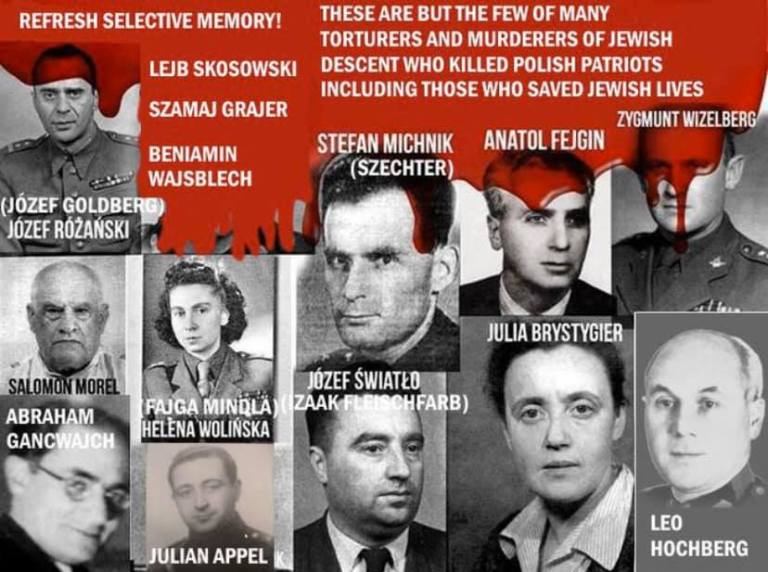
repression and crime. These include Mieczysław Mietkowski
(Mojżesz Bobrowicki), Salomon Morel, Roman Romkowski (Natan
Grynszpan-Kikiel) and Józef Różański (Goldberg) - a
psychopathic torturer, an NKVD officer during the Soviet
occupation. The brain of many security operations and an
extremely influential person was the director of Department
V MBP was Julia Brystiger.
One of the most brutal murderers who pacified the
Białystok peasants in the 1950s was Colonel Józef Czaplicki
(Izydor Kurc), who due to the persecution of the Home Army
soldiers was baptized in the security service by the
significant nickname Akower. The Communist Movement was
dealt with by Department X MBP led by Anatol Fejgin. His
deputy was the later famous fugitive to the West, Colonel
Józeflight (before the war shoemaker and communist activist
Isaac Fleischfarb).
In the Central Committee of the PPR / PZPR, Jakub Berman
was the key figure responsible for the apparatus of
coercion. Years later, Berman himself told Teresa Torańska:
"I was aware [...] that I should not take the highest
positions as a Jew or I could not [...]. Actual possession
of power does not necessarily go hand in hand with
displaying oneself [...]. I wanted to make a contribution,
make a mark on this complicated power that was shaped, but
without displaying myself. Of course, this required
dexterity. " Berman has indeed left his mark on the new
system. He personally directed the trials in which the
murders of innocent people took place.
Jews also appeared in high state positions, in the
economic apparatus, in the army. The paradox was that this
took place after the murder of the Jewish community in
Poland. For the average citizen, the Jews disappeared from
the area, but they appeared massively in the structures of
the new government, and of course in the security service.
This again strengthened the stereotype of Jewish communists
sometimes taking the form of "Jewish security". Jews became
ubiquitous and all-powerful, ruled Poland. In the 1940s on
Warsaw street, the question: "What is the most important
party in Poland?" the answer was: "Bermanówna."
Reports of the Polish independence underground and
articles of the underground press were less funny. They
described the catastrophic picture of Poland being destroyed
by communism and the Soviets. One of the most important
tools for implementing this criminal policy were to be
"nasty" "insidious" "traitors", "Murderers", "eternal
enemies of Christianity" and "foreign agents" - Jews.
Along with this came much truth as it the crimes
committed against the underground were perpetrated by Jews.
In the 1940s and 1950s, the issue of Jews in UB
leadership was obviously a public taboo. The situation
changed after 1956 when Władysław Gomułka became the party
secretary again. He ruled for the first time in 1944–1948
and was then sensitive to the fact that there were not too
many Jews in the party's leadership structures. He did not
do so for anti-Semitic reasons. He simply wanted the PPR to
obtain the widest possible, authentic social He believed
that this would not be facilitated by the "too many"
positions filled by persons considered by Poles to be
foreign.
When in 1948 Gomułka's position in Moscow began to weaken
clearly, he was convinced that the takeover of the rudder in
the party by Berman and his associates would not bring
anything good to the system. In a letter to Stalin, he
wrote: "On the basis of [...] observations I can say with
full responsibility that some Jewish companions do not feel
connected with the Polish nation, and therefore with the
Polish working class by no threads, or take a position that
could be determined called national nihilism. " Comrade
"Wiesław" was removed from power and then imprisoned.
Regardless of why many were put in power, they did.
He blamed the heroes of the letter for his fate. When he
returned to power in 1956, he dealt with Berman, Hilary
Minc, and his former opponents. Several more were sent to
prison senior officers of the Ministry of Public Security of
Jewish origin: Romkowski, Fejgin and Różański. Together with
Gomułka, leading activists of the communist armed
underground during the war, such as Mieczysław Moczar or
Stefan Kilanowicz vel Grzegorz Korczyński, returned to high
positions.
Many of them had personal accounts with the previous
team. After the Arab-Israeli war, the Gomułka team's
suppression of revenge for real and imaginary wrongs simply
exploded. The names of Jewish communists, who in the years
1944–1954 held high positions in the party and the security
apparatus, were ritually publicly mentioned.
A fair discussion of the facts became possible only in
the Third Polish Republic.
The first more substantive voice in the case was the
paper of professor Andrzej Paczkowski, delivered in 1995 on
the basis of an internal security service. The professor
stated that there were 131 out of 447 people in the security
service at the security headquarters, i.e. not 13%, as
claimed by prof. Krystyna Kersten, only about 30 percent
Certain confirmation of the data provided by professor
Paczkowski were published several years later Soviet
documents.
In one of them, responsible for the pacification of
Poland and the destruction of the underground, NKVD adviser
to the Ministry of Public Security, General Mikołaj
Seliwanowski, wrote at the end of 1945: "18.7% of Jews work
in the Ministry of Public Security, Jews hold 50% of
managerial positions. 27% of Jews work in the First
Department of this Ministry [...]. They hold all managerial
positions. In the Personnel Department - 23% of Jews, in
managerial positions - 7 people. In the Department of
Officers (special inspection) - 33.3% of Jews, all hold
responsible positions. 49.1% of Jews in the Sanitary
Department of the Ministry of Public Safety, 29.9% of Jews
in the Finance Department. "Probably the most accurate data
on an interesting topic was given by Dr. Krzysztof Szwagrzyk
in the "IPN Bulletin in 2005.
He found that out of 450 people who held high positions
in the Ministry of Public Security in the years 1944–1954
(from head over and above) there were 167 people of Jewish
origin, i.e. 37 percent. In the Public Security Committee
(1954–1956) formed from the MBP, the number dropped slightly
and amounted to 34.5 percent.
Given that Jews were at most 1 percent of citizens in
Poland at the time, the situation seems quite clear he
wrote: "In the light of the presented statistical data, the
thesis about the high participation of Jews and people of
Jewish origin in the leadership of the UB was formulated on
the basis of true premises and as such reflects a historical
fact."
You can read more about personal accounts from Poles who
faced the criminal actions of the Jews:
https://polishtruth.com/article/view/77/jewish-soviet-collaboration-
in-the-context-of-polish-history-understanding-the-past-through-victim-accounts.html
So as you can see 1 percent of Jews making up a
considerable portion of the Communist party may be
considered Żydokomuna, it is up for you to decide?
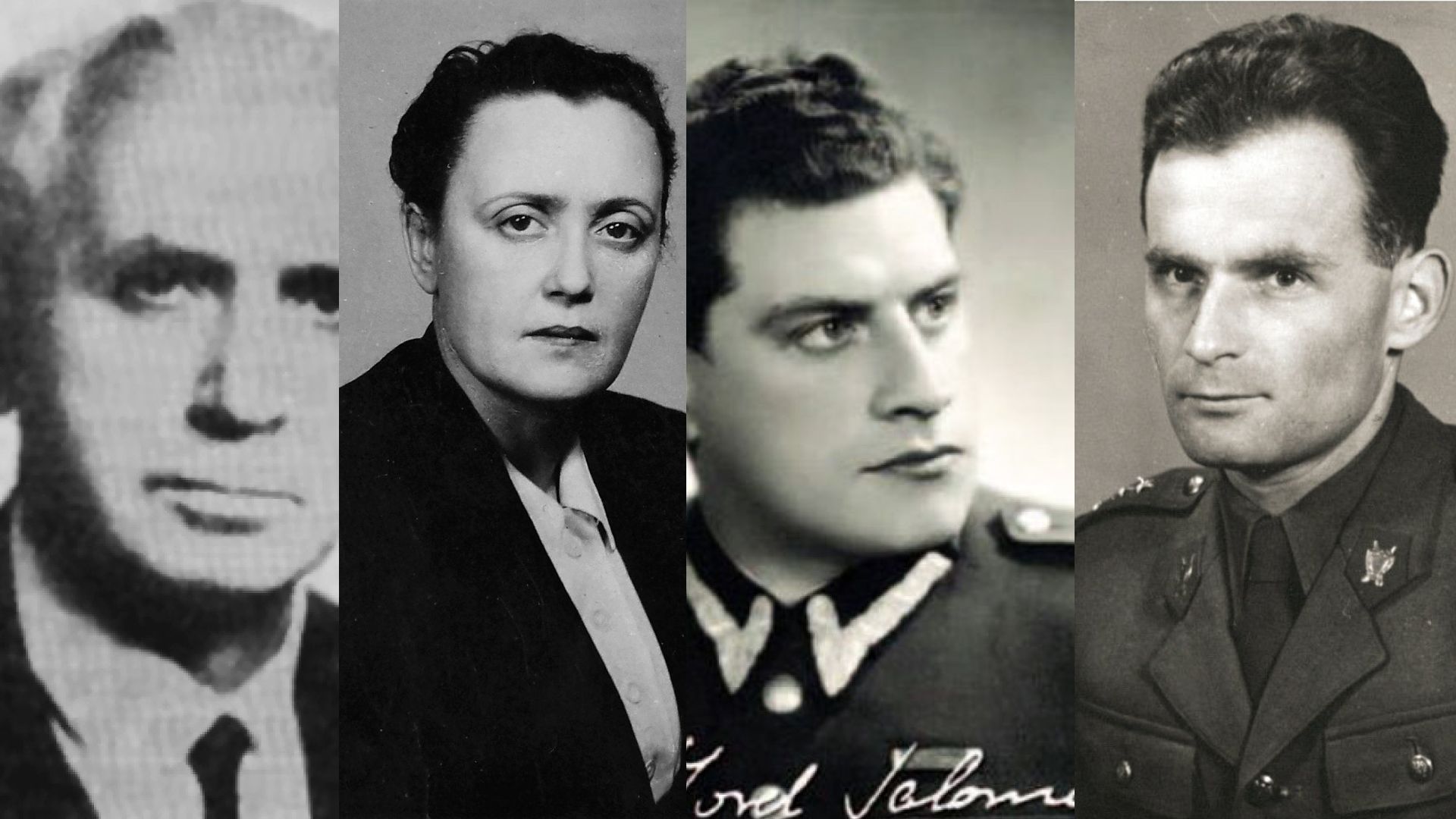
Jews in the Red Army after the war
After the Red Army entered Poland – Communist Jews,
devoting themselves completely as experts on relations
joined the NKVD services and were the main factor that
contributed most to mass arrests, executions, and
deportations of members of the Polish independence movement.
1949, USSR ambassador Viktor Lebedev, in his report to
the Soviet Ministry of Foreign Affairs:
“There is not a single Pole in the Ministry of Public
Security, from department heads to deputy ministers. They
are all Jews.”
Why do I tell you this? Because I believe in justice and
fairness and that people should know the true story of
Poland from both sides. Not just the Jewish side, so people
can understand that there may have been dislike against Jews
but it didn’t come from classic antisemitism but from
treason and loyalty.
To whitewash history and blame one people outright
without clearly looking at the full story is deceptive, you
are fooling yourself. Polish-Jewish relationships are
complicated and not so black and white.
Jewish Soviet Collaboration in the
east
We must also remember for the sake historical posterity
that Poland was also attacked and betrayed from within and
faced treason from amongst many of the Jewish citizens who
collaborated with Poland’s enemies the Soviets.
This ignored part of history should be recalled so people
understand the dynamics of Polish-Jewish relations. One
cannot simply call the Poles anti-Semitic when they were
fighting for their families and country.
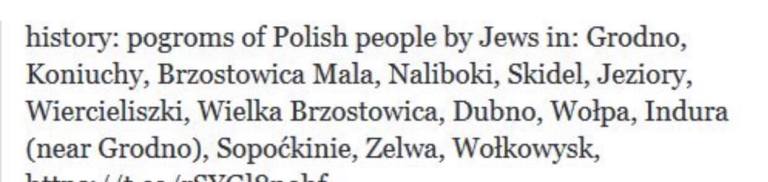
Pograms against Poles were committed throughout the east
with the utmost brutality, not unlike Ukrainian crimes. If
we count victims, it may be likely that more Poles were
murdered at the hand of Jews, than Jews killed by the Poles.
'
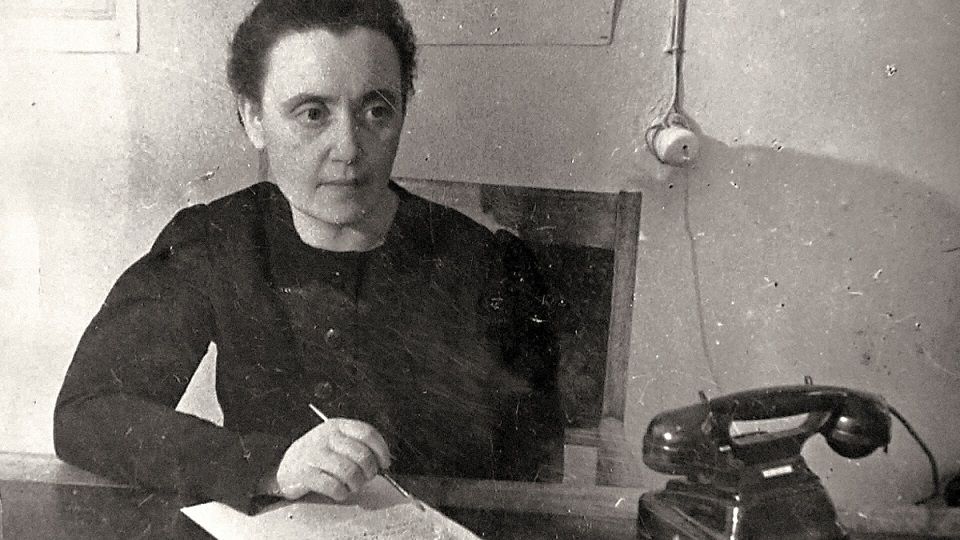
Julia Brystiger ("Bloody Luna")
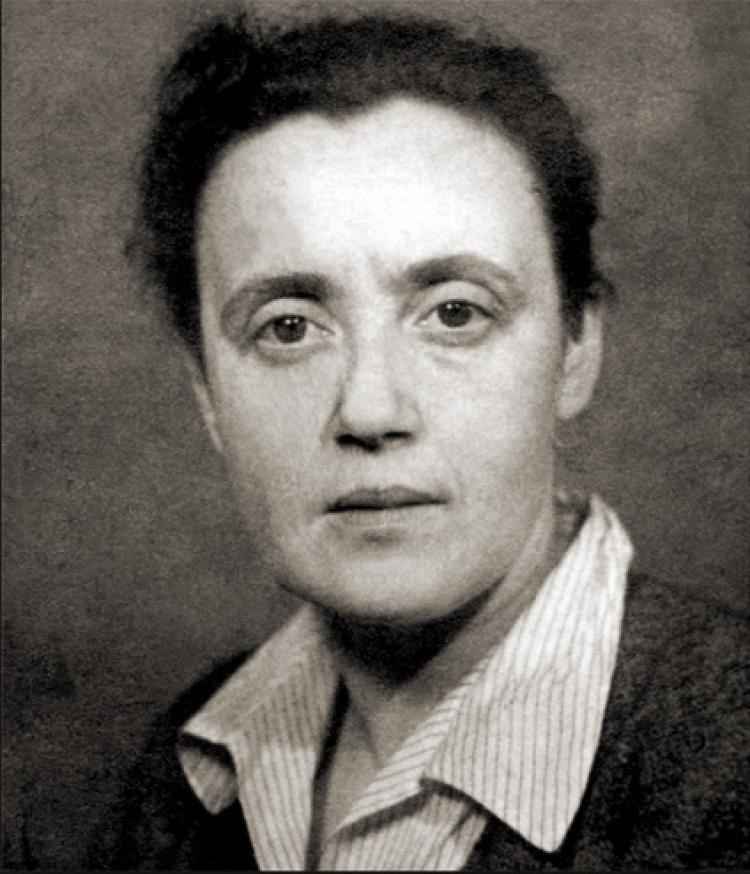
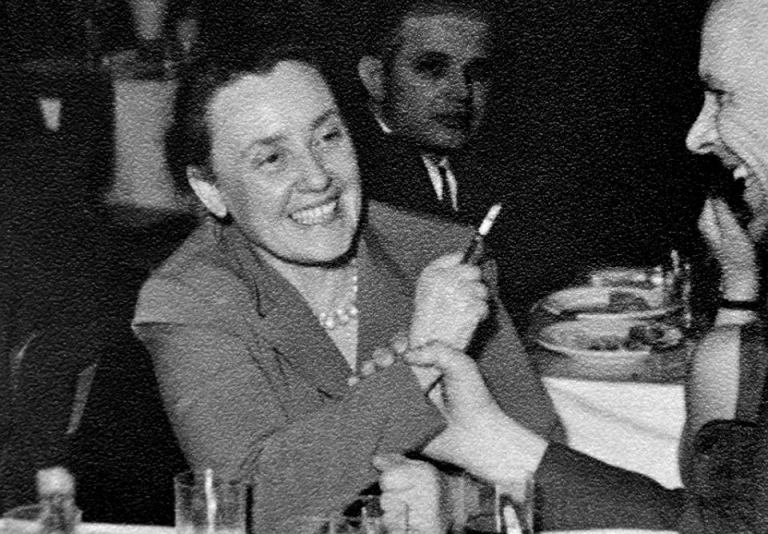
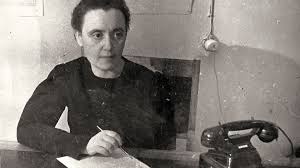
Julia Brystiger ("Bloody Luna") was the
daughter of a Jewish pharmacist from Stryj (now Ukraine). In
1920 she graduated from high school in Lwów (new Second
Polish Republic) and married a Zionist activist Natan
(Nathan) Brystiger. She studied history at the Lwów
University while pregnant and a year later gave birth to a
son, Michał Bristiger.
After graduating from University, Brystiger went to Paris
where she continued her education, receiving a PhD in
philosophy. Upon their return, in 1928–1929, she got a job
at a high school in Vilnius and in a Jewish Teacher’s
College Tarbuch. Since 1927, she was an active participant
in the communist movement, and in 1929 was fired because of
her communist agitation. Working for the Communist Party of
Poland, she was arrested several times, and in 1937 was
sentenced to 2 years in prison.
After the German and Soviet attack on Poland, Brystiger
escaped to Samarkand, accepted Soviet citizenship and became
an active member of the Soviet political administration. She
created the so-called Committee of Political Prisoners,
which helped the NKVD to imprison several members of the
prewar Polish opposition movements. She was “denouncing
people on such scale, that she antagonized even Communist
party members”. Ironically, at one point Brystiger oversaw
the interrogation and persecution of Bela and Józef Goldberg
– her future colleague, the UB interrogator known as Józef
Różański. Różańskis had committed “a crime” of accepting
Western food-aid in the form of two kilograms of rice and a
bag of flour from the Polish Government in Exile’s embassy,
in order to save their daughter from starvation.
A few years later, Józef Różański joined the NKVD and
eventually, became a high ranking functionary in the Polish
secret police. He ended up working alongside Brystiger – his
former interrogator – in the Ministry of Public Security of
Poland under Stalinism.
Following German Operation Barbarossa Brystiger fled to
Kharkov, then to Samarkand deep in the USSR. In 1943-44, she
worked for the Union of Polish Patriots, and in October
1944, joined the new Polish Workers’ Party. In December
1944, after returning behind the Soviet front, Brystygier
began working for the infamous Ministry of Public Security
of Poland, where she soon got promoted to the rank of
Director of the Fifth Department created in July 1946
specifically for the purpose of persecution and torture of
Polish religious personalities.
Her career is believed to have been so rapid also because
she was intimate with such high functionaries as Jakub
Berman and Hilary Minc. In the Polish official archives,
there is an instruction written by Brystygier to her
subordinates, about the purpose of torture:
In fact, the Polish intelligentsia as such is against the
Communist system and basically, it is impossible to
re-educate it. All that remains is to liquidate it. However,
since we must not repeat the mistake of the Russians after
the 1917 revolution, when all intelligentsia members were
exterminated, and the country did not develop correctly
afterwards, we have to create such a system of terror and
pressure that the members of the intelligentsia would not
dare to be politically active.
Brystiger personally oversaw the first stages of each UB
investigation at her place of employment. She would torture
the captured persons using her own methods such as whipping
male victims’ genitals. One of her victims was a man named
Szafarzynski – from the Olsztyn office of the Polish
People’s Party – who died as a result of interrogation
carried out by Brystygier. One of the victims of her
interrogation methods testified later: “She is a murderous
monster, worse than German female guards of the
concentration camps”. Anna Roszkiewicz–Litwiniwiczowa, a
former soldier of the Home Army, said about Brystygier: “She
was famous for her sadistic tortures; she seemed to have
been obsessed with sadistic treatment of genitalia and was
fulfilling her libido in that way.”.
Brystiger became the head of the 5th Department of MBP
sometime in the late 1940s. It specialized in the
persecution of Polish religious leaders. Brystygier – a
dogmatic Marxist – yearned to destroy all religion as an
“opiate of the masses”. She directed the operation to arrest
and detain the Primate of Poland, Cardinal Stefan Wyszynski.
The decision to arrest him had been made earlier in Moscow.
Brystygier took an active part in the “war against religion”
in the 1950s, in which only in 1950 (in one year), 123 Roman
Catholic priests were imprisoned.
She also persecuted other congregations, such as the
2,000 jailed Jehovah’s Witnesses. Julia Brystygier left the
Ministry of Public Security in 1956 and tried to become a
writer, authoring a novel “Crooked Letters”. She worked in a
publishing house under Jewish communist Jerzy Borejsza
(Różański’s brother), and was a frequent visitor to a blind
school.
Read more: https://en.wikipedia.org/wiki/Julia_Brystiger
Jewish Collaboration with the
Soviets in post-war Poland
In the Communist Party of Poland, those that were
“active” in certain areas mostly consisted of people of
Jewish descent, who, for example, were in so-called
technology (printing, courier communication, etc.), they
constituted approximately 75 percent of the members. This
incorporated into other various areas lay at the root of the
fairly widespread functioning Jewish “myth” of being
“threats to Poland.”
Stereotypes were significantly strengthened during the
Soviet occupation in 1939–1941. Among Jews, Poles saw those
who supported the Soviets and benefited from Soviet orders,
agitators and militiamen; traitors and collaborators.
When in 1944 the communists began to build a new system,
the Ministry of Public Security (MBP), it had to be under
the full control of trusted communists. The vast majority
came from the CPP, so many Jews were in the leadership of
the security service. Professor Paweł Śpiewak writes that
they played the role of Janissaries. They were isolated from
the rest of society, hated, ethnically strangers,
professionally and sentenced to life to the apparatus in
which they worked.
Many of them grew into symbols of the Stalinist system of
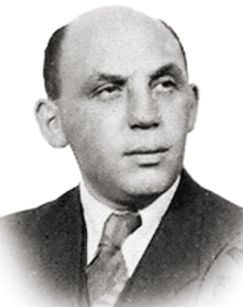
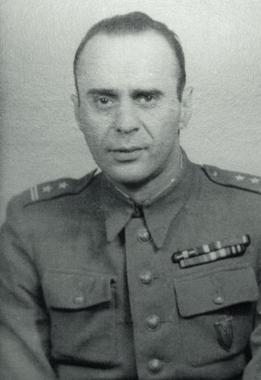
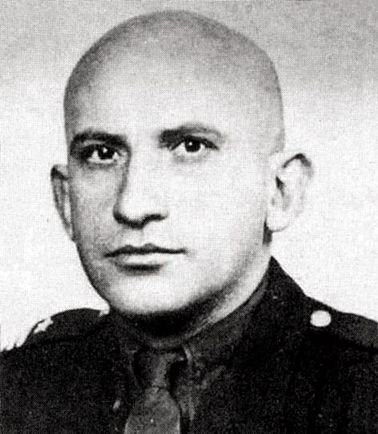
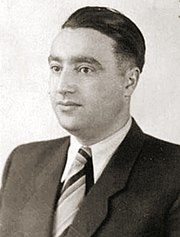
repression and crime. These include Mieczysław Mietkowski
(Mojżesz Bobrowicki), Salomon Morel, Roman Romkowski (Natan
Grynszpan-Kikiel) and Józef Różański (Goldberg) – a
psychopathic torturer, an NKVD officer during the Soviet
occupation. The brain of many security operations and an
extremely influential person was the director of Department
V MBP was Julia Brystiger. One of the most brutal murderers
who pacified the Białystok peasants in the 1950s was Colonel
Józef Czaplicki (Izydor Kurc), who due to the persecution of
the Home Army soldiers was baptized in the security service
by the significant nickname Akower. The Communist Movement
was dealt with by Department X MBP led by Anatol Fejgin. His
deputy was the later famous fugitive to the West, Colonel
Józef Swiatlo (before the war shoemaker and communist
activist Isaac Fleischfarb).
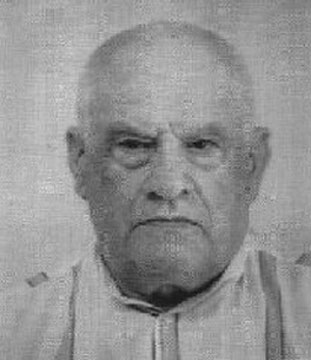
In the Central Committee of the PPR / PZPR, Jakub Berman
was the key figure responsible for the apparatus of
coercion. Years later, Berman himself told Teresa Torańska:
“I was aware […] that I should not take the highest
positions as a Jew or I could not […]. Actual possession of
power does not necessarily go hand in hand with displaying
oneself […]. I wanted to make a contribution, make a mark on
this complicated power that was shaped, but without
displaying myself. Of course, this required dexterity.”
Berman has indeed left his mark on the new system. He
personally directed the trials in which the murders of
innocent people took place.
Jews also appeared in high state positions, in the
economic apparatus, in the army. The paradox was that this
took place after the murder of the Jewish community in
Poland. For the average citizen, the Jews disappeared from
the area, but they appeared massively in the structures of
the new government, and of course in the security service.
This again strengthened the stereotype of Jewish communists
sometimes taking the form of “Jewish security”. Jews became
ubiquitous and all-powerful, ruled Poland. In the 1940s on
the Warsaw street, the question: “What is the most important
party in Poland?” the answer was: “Bermanówna.” Reports of
the Polish independence underground and articles of the
underground press were less funny. They described the
catastrophic picture of Poland destroyed by communism and
the Soviets. One of the most important tools for
implementing this criminal policy were to be “nasty”
“insidious” “traitors”, “Murderers”, “eternal enemies of
Christianity” and “foreign agents” – Jews.
In the 1940s and 1950s, the issue of Jews in UB
leadership was obviously a public taboo. The situation
changed after 1956, when Władysław Gomułka became the party
secretary again. He ruled for the first time in 1944–1948
and was then sensitive to the fact that there were not too
many Jews in the party’s leadership structures. He did not
do so for anti-Semitic reasons. He simply wanted the PPR to
obtain the widest possible, authentic social He believed
that this would not be facilitated by the “too many”
positions filled by persons considered by Poles to be
foreign.
When in 1948 Gomułka’s position in Moscow began to weaken
clearly, he was convinced that the takeover of the rudder in
the party by Berman and his associates would not bring
anything good to the system. In a letter to Stalin he wrote:
“On the basis of […] observations I can say with full
responsibility that some Jewish companions do not feel
connected with the Polish nation, and therefore with the
Polish working class by no threads, or take a position that
could be determined called national nihilism.” Comrade
“Wiesław” was removed from power and then imprisoned.
He blamed the heroes of the letter for his fate. When he
returned to power in 1956, he dealt with Berman, Hilary Minc
and other his former opponents. Several more were sent to
prison senior officers of the Ministry of Public Security of
Jewish origin: Romkowski, Fejgin and Różański. Together with
Gomułka, leading activists of the communist armed
underground during the war, such as Mieczysław Moczar or
Stefan Kilanowicz aka Grzegorz Korczyński, returned to high
positions. Many of them had personal accounts with the
previous team. After the Arab-Israeli war, the Gomułka
team’s suppression of revenge for real and imaginary wrongs,
as well as the usual hatred of Jews, simply exploded. The
names of Jewish communists, who in the years 1944–1954 held
high positions in the party and the security apparatus, were
ritually publicly mentioned.
A fair discussion of the facts became possible only in
the Third Polish Republic.
The first more substantive voice in the case was the
paper of professor Andrzej Paczkowski, delivered in 1995 on
the basis of an internal security service. The professor
stated that there were 131 out of 447 people in the security
service at the security headquarters, i.e. not 13%, as
claimed by professor Krystyna Kersten, only about 30 percent
of confirmation of the data provided by professor Paczkowski
were published several years later Soviet documents.
In one of them, responsible for the pacification of
Poland and the destruction of the underground, NKVD adviser
to the Ministry of Public Security, General Mikołaj
Seliwanowski, wrote at the end of 1945: “18.7% of Jews work
in the Ministry of Public Security, Jews hold 50% of
managerial positions. 27% of Jews work in the First
Department of this Ministry […]. They hold all managerial
positions. In the Personnel Department – 23% of Jews, in
managerial positions – 7 people. In the Department of
Officers (special inspection) – 33.3% of Jews, all hold
responsible positions. 49.1% of Jews in the Sanitary
Department of the Ministry of Public Safety, 29.9% of Jews
in the Finance Department. ” Probably the most accurate data
on an interesting topic was given by Dr. Krzysztof Szwagrzyk
in the “IPN Bulletin” in 2005. He found that out of 450
people who held high positions in the Ministry of Public
Security in the years 1944–1954 (from head over and above)
there were 167 people of Jewish origin, i.e. 37 In the
Public Security Committee (1954–1956) formed from the MBP,
the number dropped slightly and amounted to 34.5 percent.
Given that Jews were at most 1 percent of citizens in Poland
at the time, the situation seems quite clear he wrote: “In
the light of the presented statistical data, the thesis
about the high participation of Jews and people of Jewish
origin in the leadership of the UB was formulated on the
basis of true premises and as such reflects historical
fact.”
Translated from Polish.
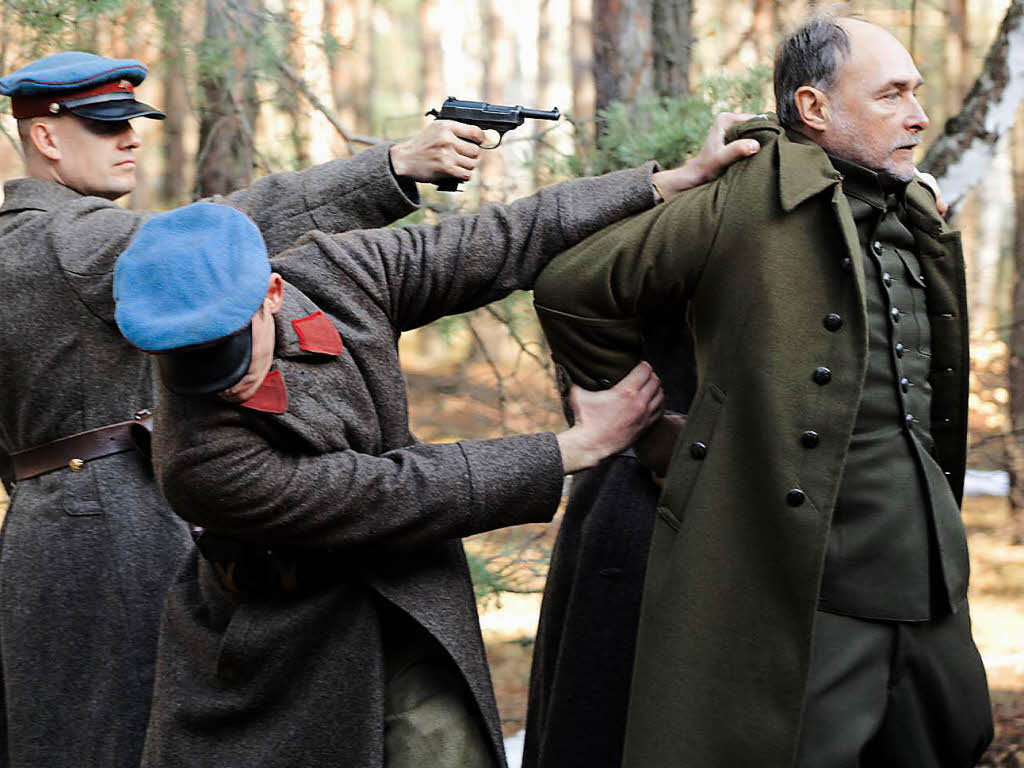 [still from
Andrzej Wajda's 2007 movie "Katyń"]
[still from
Andrzej Wajda's 2007 movie "Katyń"]
Eastern Poland – Jewish
collaboration in the Borderlands
Almost everyone knows about the so-called pogroms of Jews
in Poland; although they are only so-called, practically no
one knows of the pogroms committed against the Poles by
Jews. These horrific crimes began the moment the Soviets
entered Poland. Why don’t we know? Because the Polish were
unable to write their own history. They were behind the Iron
Curtain, and others were writing their story.
What was it really like
during the Soviet invasion?
Only recently, on the pages of Rzeczpospolita, was a
lengthy article by Professor Tomasz Strzembosz, a
distinguished researcher of recent Polish history,
especially the period 1939-54. Strzembosz’s article
demonstrates the Jewish population's actual role in eastern
Poland during the first Soviet occupation.
The discussion to date, declares Strzembosz, “overlooks
the most important fact: what happened in Jedwabne after the
German army entered the area, i.e. who, when, and in what
circumstances carried out the mass murder of the Jewish
population of Jedwabne.” Strzembosz analyzes in-depth the
behavior of the Polish and Jewish populations in the years
1939-41, especially the initial and final periods of the
first Soviet occupation.
Jews Joined the NKVD
“The Jewish population,” writes Strzembosz, “especially
the young and the urban poor, participated en masse in
greeting the entering [Soviet] army and in introducing the
new order, even with guns in their hands. There are also
thousands of testimonies to this: Polish, Jewish and Soviet;
there are the reports of the Armed Combat Union
commander-in-chief, Gen. Stefan Grot-Rowiecki, and there is
the report of courier Jan Karski; there are accounts
recorded during the war and in the postwar years.
Jews Executing Poles
What is more, the “guards” and “militias” springing up
like mushrooms right after the Soviet attack were primarily
made up of Jews. Nor is this all.
Jews committed acts of revolt against the Polish state,
taking over towns and setting up revolutionary committees
there, arresting and shooting representatives of the Polish
state authorities, and attacking smaller or even reasonably
large units of the Polish Army (as in Grodno). It was armed
collaboration, the side of the enemy, betrayal in the days
of defeat.”
Organizers of the red
terror
The Fifth Column
So it was in the first period when the Polish state was
still defending itself when our army units were fighting,
and it seemed that not all was lost. The Jews then played
the role of a “fifth column.” Later, things became much
worse. Strzembosz cites the conclusions of Dr. Marek
Wierzbicki as to who implemented the Bolshevik terror – of
course, the NKVD and, before that, the Red Army. Still, the
miscellaneous guard formations and militias played a
decisive role every day. And their ranks were primarily
filled with Jews. “Polish Jews in civilian clothes, with red
bands on their arms and armed with guns also play a large
part in arrests and deportations.
That was the most drastic thing, but for the Polish
community, another glaring fact was the large number of Jews
in all the Soviet agencies and institutions. In
September-December 1939, numerous arrests took place of
those representatives of the Polish population who, before
the war, filled high functions in the administrative and
political structures of the Polish state or were very
involved in community work. The local Jews, members of the
temporary administration or militia, provided extensive
assistance to the Soviet authorities in tracking down and
arresting them.”
Jews Picked Out Poles For
Execution
Why did this happen? What were the roots of this terrible
hatred toward Poland and the cruel revenge on Poles? “It is
true,” writes Strzembosz, “things were not going very well
for the Jews in Poland. But still, Jews were not being
deported to Siberia, shot, sent to concentration camps, or
killed by hunger and slave labor. If they did not consider
Poland their homeland, they still did not have to treat it
as an invader and join its mortal enemy in killing Polish
soldiers and murdering Polish civilians fleeing to the east.
Nor did they have to take part in designating their
neighbors for deportation.”
Torture in Jedwabne
Strzembosz proves beyond a shadow of a doubt that events
took precisely the same course in Jedwabne itself. Here is
one account from a resident of Jedwabne, Józef Rybicki,
summing up what happened in the town after it fell to the
Soviets:
Revenge On Their Polish
Neighbors
“Jews who had put up an archway greeted the Red Army.
They changed the old town government and proposed a new one
drawn from the local population (Jews and communists). They
arrested the police, the teachers . . . They led the NKVD to
apartments and houses and denounced Polish patriots.” The
description of the tortures inflicted upon Polish
conspirators by the NKVD in Jedwabne is shocking. The
following is an account by Corporal Antoni B., a member of
the anti-Soviet underground who was turned in to the NKVD by
Jews:
“they took me for interrogation, the investigating judge and
the NKVD commander and one torturer came, and they sat me on
a stool next to a brick wall, then I look over, and one in
civilian clothes took a stick from behind the stove like the
kind in the walls of our tents, that long and thick, and
suddenly they threw me on the floor and stuffed my cap in my
mouth and started to beat me, I couldn’t cry out because the
judge sat on my legs and the second one held me by the head
and held the cap in my mouth, and I fought back until I tore
the cap to bits, and the third torturer beat me the whole
time, I got that stick more or less 30 times, and they
stopped beating me and sat me on the stool by the wall. I
had long hair, and the senior lieutenant grabbed me by the
hair and started to beat my head against the wall, I thought
that nothing would be left of my head. He tore the whole
clump of hair from my head. They threw me on the ground and
started to beat me with a hazel stick, they turned me from
side to side and beat me, and in addition, two of them were
still sitting on me and suffocating me and said that they
would finish me off. They kept beating me until they
probably knew that I couldn’t take anymore, so they finally
let me go. They beat me like a cat in a sack, and at the
end, they sat me on the stool and beat me with the stick on
the arms.” (from W czterdziestym nas matko na Sybir zesłali
[In 1940, Mother, They Sent Us to Siberia], published by the
Solidarity Interfactory Structure, p. 82).
NKVD Ship Poles To Siberia
I took this text from a collection of accounts prepared
years ago for print by Professor Jan T. Gross. When writing
his book about Jedwabne, Gross skips over the description of
Antoni B.’s arrest and torture, although he quotes other
fragments of this account. Why?
The facts leave no room for doubt: the Jedwabne Jews, as
in the entire territory occupied by the Soviets, constituted
the nuts and bolts of the machinery of repression. Up to the
last moment, they were delivering Polish patriots into the
hands of the NKVD and preparing the next deportation
transports to Siberia.
Polish Jews Were
Ecstatic When Russians Occupied Poland
[The text below is mainly
taken from
Neighbours on the Eve of the Holocaust - Polish-Jewish
Relations in Soviet-Occupied Eastern Poland, 1939–1941,
Chapter 5, by Mark Paul. Consult it for references/sources
to the quotes.
Note: Headlines in bold in the segments
below, also those in quotes, have been added by
this site]
The Targeting of Polish
Officials and Civilians
Numerous testimonies attest to the prominent role played
by Jews in the militias and “revolutionary committees” that
sprung up both spontaneously and at Soviet urging. These
entities often played a decisive part in getting the new
regime and its machinery of repression off the ground. Their
activities were buttressed by large numbers of individual
collaborators acting on their own initiative to further the
Soviet cause.
The Bandits Took Charge
Throughout Eastern Poland; local Jewish, Belorussian, and
Ukrainian communists formed militias and “revolutionary
committees.” With the blessing of the Soviet invaders, they
apprehended, robbed, and even murdered Polish officials,
policemen, teachers, politicians, community leaders,
landowners, and “colonists” (i.e. interwar settlers) – the
so-called enemies of the people. They also plundered, set
fire to Polish property, and destroyed Polish national and
religious monuments. Scores of murders of individuals and
groups have been recorded. Robbery of Polish property took
on massive proportions, with the spoils enriching the
collaborators’ families and communities.
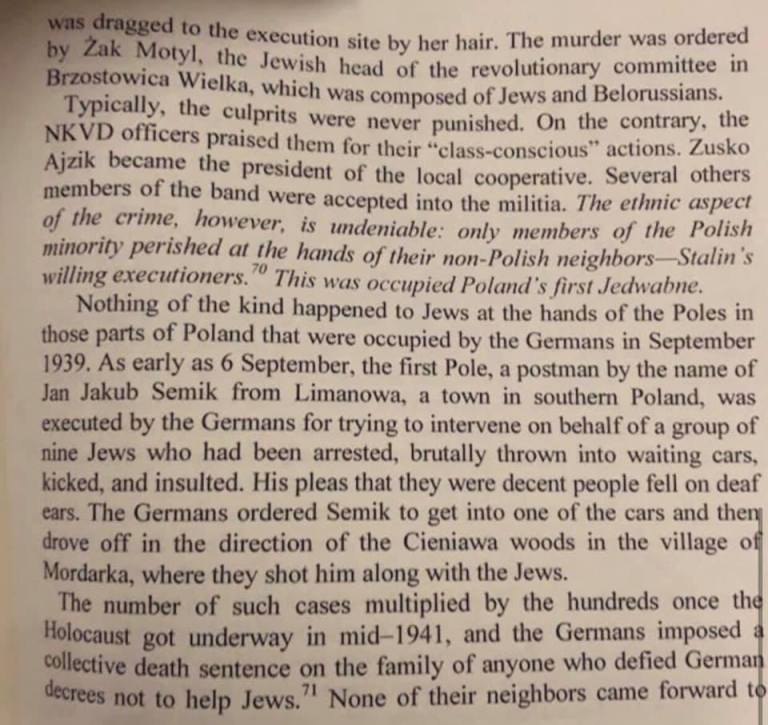
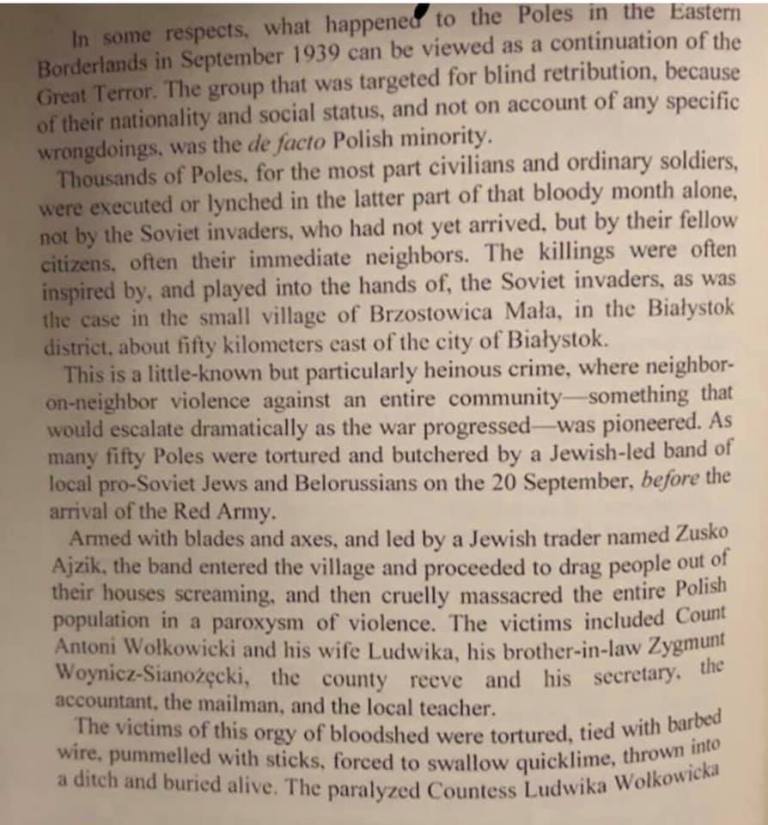
One of the earliest and most hideous crimes was the
murder of almost as many as fifty Poles in the village of
Brzostowica Mała, near Grodno around September 20,
before the Soviets were installed in the area.
Vicious Jews Killed A Polish
Countess
A pro-communist band with red armbands and armed with
blades and axes, led by a Jewish trader by the name of
Ajzik, entered the village, dragged people out of their
houses screaming, and cruelly massacred the entire Polish
population. The victims included Count Antoni Wołkowicki and
his wife Ludwika, his brother-in-law Zygmunt
Woynicz-Sianożęcki, the county reeve and his secretary, the
accountant, the mailman, and the local teacher. The victims
of this orgy of violence were tortured, tied with barbed
wire, pummelled with sticks, forced to swallow quicklime,
thrown into a ditch, and buried alive.
The paralyzed Countess Ludwika Wołkowicka was dragged to
the execution site by her hair. Żak Motyl ordered the
murder, a Jew who headed the “revolutionary committee” –
composed of Jews and Belorussians – in Brzostowica Wielka.
Typically, the culprits were never punished. On the
contrary, the NKVD officers praised them for their
“class-conscious” actions, and Ajzik was made the president
of the local cooperative. The racist aspect of the crime,
however, is undeniable – only members of the Polish minority
perished at the hands of their non-Polish neighbors.
Janusz Brochwicz-Lewiński, an officer cadet who attained
the rank of corporal in 1939, was captured by the Soviets
near Stołpce. He was one of fifteen Poles, a judge, a
pastor, a chaplain, a teacher, and several civil servants,
taken before an NKVD tribunal in groups of five and
sentenced to death. Fortunately, his group escaped while
being transported to their unknown execution site. The other
ten condemned Poles were executed by firing squad.
Judges, Policemen, Teachers
Were All Killed
While Brochwicz-Lewiński was imprisoned in Stołpce, an
NKVD officer made the rounds in the company of his aide, a
local Jew who identified the members of the Polish educated
class, now the so-called enemies of the people, among whom
he had lived for years, by their occupation: judge, teacher,
policeman, civil servant, forest-ranger, landowner.
Killed Catholic Priests
Equally despicable were the murders of Catholic clergymen
carried out by roving gangs of Jews and Belorussians such as
that of Rev. Bronisław Fedorowicz, the pastor of
Skrundzie near Słonim, and those of Rev. Antoni
Twardowski, pastor of Juraciszki, near
Wołożyn, and the latter’s cleric, the Jesuit Stanisław
Zuziak.
A rabble of pro-Soviet Jews and Belorussians came to
apprehend Rev. Józef Bajko, the pastor of Naliboki near
Stołpce, intending to hand him over to the Soviet
authorities or to possibly lynch him (as had been done in
other localities). A large gathering of parishioners foiled
these plans, allowing Rev. Bajko to escape before the
arrival of the NKVD.
Henryk Poszwiński, the prewar mayor of
Zdzięcioł, a town near Nowogródek,
described the new order in his town:
In Zdzięcioł, a Jewish woman named Josielewicz stood at
the head of the revolutionary committee, which was
organized even before the arrival of the Soviet army.
Jews Executed Polish Police
The local police left town just after the Red Army had
crossed the border. On the evening of September 17, I
was informed that a band of criminals released from jail
was getting ready to rob some stores. I called a fire
brigade and civilian guard meeting, and these two
organizations began to provide security in our town. The
stores were spared, but the [criminal] bands attacked
the defenseless civilians escaping eastward from the
Germans. The culprits stripped them of their clothes,
shoes, and anything else they had on them. Those, who
resisted, were cruelly killed on the spot. Outside the
town, roadside ditches were strewn with dead people. ...
The revolutionary committee, which soon disarmed the
fire brigade and civilian guard, stood by idly while all
this took place.
In the morning hours of September 18th, a small
detachment of the Polish army still traversed Zdzięcioł.
A field hospital team was transported in a dozen
horse-drawn carriages. The convoy consisted of thirty
soldiers led by a sergeant. The revolutionary committee
attempted to stop and disarm them. The soldiers
discharged a volley of gunfire into the air. The
revolutionary committee ran out of town in a stampede
and hid in the thickets of the municipal cemetery. ...
In the afternoon hours of September 18th, the Soviet
army entered Nowogródek. That evening the first three
Soviet tanks arrived in Zdzięcioł. The entire
revolutionary committee, headed by Josielewicz, came out
to greet the invaders shouting: ‘Long live the great
Stalin!’ After a short stop, the tanks moved toward
Słonim. The revolutionary committee ordered owners to
display red flags in their houses. The Poles cried like
children, tearing the white portion off the [white and
red] Polish flags. ...
In the morning hours of September 19th, a Jew from the
revolutionary committee came to the town hall and
advised me that the committee was summoning me to attend
a meeting concerning an epidemic of foot-and-mouth
disease which had broken out among some cattle that had
been brought to Zdzięcioł. Believing what I had been
told to be accurate, I immediately got up from my desk
and accompanied that man to the headquarters of the
committee located at the other end of town. I had to
wait about an hour before I was taken to the
chairwoman’s office. During that time, I observed the
accurate picture of the “revolution.” Hundreds of people
surrounded the committee premises; most of them were
women who had broken out in tears and were wailing.
‘Return our stolen property!’ they cried. ‘Release our
husbands and fathers of our children!’ ...
People who had been badly beaten occupied the corners of
the room; most of them were refugees fleeing the
Germans. The committee members, who were dressed in
civilian clothes with red armbands and had Soviet stars
on their hats, carried rifles or revolvers in their
hands and competed with each other in brutally
mistreating these people. It was a sight that I had
difficulty countenancing.
After about an hour’s wait, the door was thrown open,
and I was summoned into the chairwoman’s office. When I
entered, I noticed three rifle barrels pointed at me.
One of the bandits yelled, ‘Hands up!’ I raised my hands
and turned to the chairwoman. ‘What have I done wrong?
Why are you treating me like this?’ Although she knew
Polish well, Josielewicz replied in Russian, ‘You will
find out in due course.’ ...
After being searched [and stripped of all my personal
effects. I was instructed to move toward the table
occupied by Josielewicz, the chairwoman, and by a Soviet
NKVD officer. The officer removed a form from his bag
and started to complete it. ... The last portion of the
form asked for the reason for my arrest and
imprisonment. Before filling it out, the NKVD officer
turned to the chairwoman and asked what to enter. The
chairwoman replied, ‘He’s a Polish officer, a Polish
patriot, the town's former mayor. That’s probably reason
enough. The NKVD officer wrote in this portion:
‘Dangerous element.’
After filling out this form, three committee members
escorted me to police detention. Twenty-three people had
been arrested in a small detention room built to hold no
more than four people for a short period. Unable to sit
in that crowded place, we had to stand next to one
another the whole time. People fainted from lack of air
and had to relieve themselves on the spot. Among those
arrested were school principals, county reeves, village
administrators, officials, and various others who had
escaped eastward from the Germans, as well as a priest
who often repeated under his breath, ‘Forgive them,
Father, for they know not what they do.’
We spent almost an entire day in this place of
detention. Finally, on September 20, we were put in a
truck and taken to the jail in Nowogródek. During the
journey, which lasted more than an hour, we were lying
on the floor of the truck used to transport coal while
four Jews from the revolutionary committee watched us
with rifles in their hands. Every now and then, one of
them would warn us, ‘Don’t lift your heads, or you’ll
get a bullet in your skull.’
Along the road over which the truck moved slowly, we
encountered Soviet artillery going in the opposite
direction in many places. Soviet soldiers would approach
our vehicle during the stops and ask, ‘Who are you
carrying, and where are you going?’
‘We’re taking Poles to the jail,’ the guards would
answer.
‘What have they done wrong?’
‘They haven’t done anything. It’s enough that they’re
Poles!’
From Clerk To Head Of The
Militia
In Baranowicze, Jews filled the “red
militia” ranks and denounced Polish officers, policemen,
teachers, and government officials to the NKVD. At night
black box-like carriages arrived at the homes of these
people. They were loaded on, taken to the railway station,
and deported to the Gulag – never to be heard from again.
Among those arrested with the assistance of local Jews was
the sister of Bogusław J. Jędrzejec and eight members of her
family. The NKVD murdered her husband and father in
Baranowicze; the rest of the family was deported to the
Soviet interior in the winter of 1939–1940. According to
historian Yehuda Bauer, ‘Jewish agents of the Soviet secret
police penetrated every corner; everyone was terrified of
being denounced and deported.’
According to Nachum Alpert, in Słonim,
A provisional city administration was organized in
Slonim, headed by Matvei Kolotov, a Jew from Minsk. ...
Kolotov immediately began organizing a “Workers Guard”
(a temporary militia), whose function was to maintain
order in the city. Heading this Guard was Chaim Chomsky,
a veteran communist. ....
... And no sooner did the NKVD arrive than it made
itself felt everywhere. First, they deported merchants,
manufacturers, Polish officers, and police; then
Bundists, Zionists, Trotskyites, and Polish “colonists”
and “kulaks” from the villages. Many innocent people
were caught in this dragnet.
According to Polish sources, Chaim Chomsky (Chomski), who
took charge of the “revolutionary committee,” issued a
direction to have the Polish mayor Bieńskiewicz arrested
when he reported to work on September 18; afterward, all
traces of the mayor disappeared.
A Jew, soldier in the Polish army, who found himself in
Slonim for a brief period in September 1939, claims that the
only Jews who collaborated with the Soviet invaders were
long-time communists: ‘I don’t deny that there were Jews –
old-time communists – who disarmed Polish detachments,’ but
adds, quite correctly, ‘but can one blame this on all the
Jews?’
In Dunilowicze, a small town near
Postawy, a Jewish woman named Chana led Soviet soldiers to
the home of her neighbor, Józef Obuchowski, a sergeant of
the Frontier Defence Corps. Pointing to his wife, she said,
‘This is a Polish ‘Pani’ [‘lady’ – the feminine of ‘Pan’],
her husband is in the military.’ The soldiers tore apart the
house looking in vain for her husband, the sergeant. The
Polish woman was taken away instead. During her
interrogation, which lasted twenty-four hours, she was
forced to keep her hands raised and was drenched with water
until she passed out.
Another Polish “Pani,” Mrs. Kwiatkowska, was arrested by
the Jewish Committee on her estate near the towns of
Wołożyn and Wiszniew, soon after
the Soviet army passed through. The de facto local
authority rested with such groups which had sprung up like
mushrooms. It was they who led the Soviet officials to their
prey. Mrs. Kwiatkowska endured Soviet prisons until the end
of 1949.
Witold Rozwadowski and his father were arrested on their
estate near Kucewicze. The former was held interned in
Oszmiana, where he was murdered by a Jewish colleague who
had joined the Soviet militia.
In Oszmiana, They Became
Kings
The temporary authorities consisted of Jews and
communists who proclaimed themselves the commissars of the
town. Power was exercised with the help of the militia
consisting most of Jews and communists. The Jews and
communists served the Bolsheviks through denunciations out
of spite and by betraying soldiers and police out of
uniform. The militia was the population's terror because
individual militiamen competed with each other in their
servility.
In Nowa Wilejka,
The positions of authority were filled solely by Jews
and Soviet citizens, who were very well provided for in
every respect by the Soviet authorities. The latter also
oversaw the agitators, who had at their disposal Jews
and local riff-raff. The Soviet authorities issued the
following directives: agitation centres were
established, the so-called agitpunkts, and a large
number of agitators, mostly Jews, were brought in from
Soviet Russia.
They were ordered to hold meetings of the local
riff-raff with communist leanings, former prisoners and
Jews in order to prepare them to help out. They were
ordered to hold meetings at which all things Polish, the
Polish system, and the Polish government were criticized
and condemned and Polish patriots were mocked. The
public was called on to denounce such people because
they were dangerous for the Soviets, to arrest them, and
to deport them. The [Polish] public was not receptive
and even replied with a furor: ‘what for?’ All of these
insults and demands came from the mouths of Soviet
agitators and Jews.
These meetings were generally compulsory and those who
did not attend faced repercussions. ...
Mass searches were carried out at the homes of former
military men, policemen and civil servants, and those
people who were thought to be harmful to the Soviet
Union were arrested.
The searches and arrests all took place only at night;
they were carried out by the police which was always
overseen by the NKVD. Hardly anyone came out of such a
search whole; someone from the entire family inevitably
fell victim to it. Very often during the searches they
seized documents, money, valuables, photographs of
former military men and policemen, and important papers,
all of which simply disappeared. The searches were
entirely pro forma because these people were already
judged (found guilty) in advance, for the most part by
the Jewish communists. After these people were arrested
examinations and investigations followed, and the most
incredible confessions were extracted from them as a
result of all sorts of repressions and torture. That was
their sole and favourite goal – the destruction and
wreaking rage upon the Poles. In order to extract
additional information about those Poles who still
enjoyed their freedom, apart from formal investigations,
Jewish communists were planted in prison cells to
investigate and to extract such information from their
victims.
For example, one night a group of Poles was arrested by
local Jews overseen by the NKVD. The victims were then
examined and investigated using “light torture” methods
such as hitting on the head, while it was covered with
cardboard, with the spine of a book or a heavy book or a
rubber club. After such investigations people walked
around half-dazed, lost consciousness briefly, or even
lost their minds. Many of my friends fell into this
category, for example, Krawczyk, the headman of the
Polish state in Nowa Wilejka, Second Lieutenant Zygmunt
Piórko, in the active service of the Third Combat
Battalion Wilno, also from Nowa Wilejka, and many
others. The former could not endure it and died; Piórko
latter suffered a nervous disorder of the brain and went
insane. …
At this time they ordered the compulsory registration of
the population and the issuance of temporary identity
documents or attestations for which the population was
afraid to go and show themselves to the Soviet
authorities, at whose side local Jews sat as clerks and
provided an opinion about every Pole, who came to
register.
Many Poles resided there or hid without registering,
which also increased the number of those arrested and
the new victims of torture.
Vicious Little Demigods
After fulfilling the orders of the Soviet authorities
and packing part of the Polish population into jail as a
hostile element for the Soviets, they quickly embarked
on their next task, pre-election agitation, which took
place on a wide scale. A large number of agitators were
sent from Soviet Russia, and these gathered the local
riff-raff to help out, such as Jews and former
prisoners, not only political ones but also others. They
started to convoke all sorts of meetings, which were
compulsory under threat. ...
On the scheduled meeting days, agitators were dispatched
to workplaces. They called a break in the work or an
earlier quitting time and led everyone to where the
meeting was to take place, advising them in advance that
no one was to be missing. … Meetings held on days off
work … or those announced by written notices were
doomed. … only Jews and some poorly educated children
came. ...
From Store Clerk To Local Commissar
Every meeting was graced by a large cordon of uniformed
and undercover police and the local Jewish population. …
the agitators kept repeating that they would take care
of the resisters. …
The agitators and Jews frequently raised all sorts of
nonsense about General Sikorski [the leader of Poland’s
government-in-exile] and the former Polish government.
They said that one should get out of one’s head the
notion that liberation would come from General Sikorski
or from England or from anyone else. At this the Jews,
agitators and militia replied with applause. The
[Polish] population sat there silently without giving
any signs of life.
A committee was set up to draw up electoral lists. For
the most part Jews were assigned to the committee; they
went from house to house and registered everyone
eighteen and over. For example, to my wife’s parents
came two Jewish women, accompanied by an agitator, a
young Jew from Wilno, to register them. ...
Jews Killed And Then took Estates
In order to win more people over to their side, they
ordered the redistribution of land seized from [Polish]
settlers and wealthy landholders to laborers, poor
farmers, and Jews … Only the Jews willingly took the
land given to them …
Premises were designated, the city was divided up into
regions, and an electoral committee was struck. The
electoral committee consisted mainly of Jews, some
members of the local riff-raff, and Soviet agitators,
many of whom were Jews too. ...
From Students To Election Supervisors
The polling stations were manned by Jews, the families
of Soviet agitators, and others. The elections got
underway. The mood of the [Polish] population was
gloomy.
The polling stations were full of Soviet agitators,
politruks [political commissars], uniformed and
undercover police, Jews, and NKVD. A large number of
Soviet soldiers and automobiles were assigned to help
out. ...
[Because many Poles were evading] … late in the
evening, the agitators, Soviet soldiers, NKVD, and Jews
set out in automobiles to collect eligible voters from
their homes and drive them to cast their votes. ...
Up until the last moment, they did not inform us
officially of the fact that there was a plebiscite and
the actual purpose of the voting [namely, to sanction
the incorporation of seized Polish territory into the
Soviet Union – M.P.], thus everyone [i.e. the Poles]
considered this to be a big joke, because voting for
unknown people and unknown purposes was absurd. Even
though it was forbidden to cross things off or to make
changes on the ballots, there was a lot of crossing out.
Any voter who made some inappropriate gesture with his
ballot was observed and noted by the agitators. … A few
weeks after the elections, searches, arrests,
repressions, and torture were recommenced again on a
large scale, as well as the deportation of the Polish
population to the so-called polar bear country.
A Polish woman recalls how the shopkeeper Rumkowa’s son,
her Jewish neighbors who knew the townspeople well, helped
the Soviets round up and arrest targeted Poles in Nowa
Wilejka. When the Germans arrived in 1941, and the
Lithuanian police started to harass the Jews, this same
Jewish shopkeeper bemoaned what was happening to the Jews.
The Polish woman then reminded the shopkeeper of how her own
son had behaved when the Bolsheviks arrived. Embarrassed,
the Jewish woman hung her head in silence.
In Białystok, the NKVD utilized the
members of the largely Jewish “citizens’ committee,” which
was formed before the entry of the Red Army, to create a
“workers’ militia” armed with weapons confiscated from
Polish soldiers. The militia carried out huge numbers of
searches in Polish homes. As one witness reports: "They
looked for weapons in every nook and cranny. If they found
anything made of gold, such as rings and bracelets, they
took it for their own use, and if one offered resistance,
they were threatened with death."
A pro-communist committee made of Jews, which Awraam
Laznik led, seized control of the town of Sokółka,
north of Białystok. The “red militia,” composed of local
Jews (many of them Bund members and an aggressive cobbler by
the name of Gołdacki) and headed by Szymon Aszkiewicz, a
reserve officer of the Polish army, arrested many Polish
officials and prominent local Poles and executed three
Polish policemen. They conducted numerous raids, looking for
arms and seizing radio receivers and photo cameras. A Jewish
blacksmith named Abel Łabędych shot a Polish policeman in
the nearby village of Bogusze, on September
24th.
A head forester named Łabecki was summoned to a Soviet
post established in the town of Sokółka. He
was kicked and beaten by armed Jews wearing red armbands.
Devastated by this brutal treatment, he took his life by
throwing himself under a train. His wife and six-year-old
son were deported to Irkutsk in the winter of 1940.
Stefan Kurowski had better luck when he was stopped on
his bicycle on a highway on the outskirts of Łapy,
west of Białystok, by a Jewish militiaman. Fanatically
consumed by his new role, this young Jew burst into a long
tirade against the “Pan’s” Poland, whose “oppression” of the
Jews he was now avenging as an enforcer of Soviet authority.
Having nearly fallen into a trance as a result of his
political agitation, this militiaman, less aggressive and
brutal than most, seemed to have forgotten why he had
stopped Kurowski in the first place and allowed him to
continue on his way.
Yesterday He Worked As A
Clerk At A Butcher Shop
Today; he is a party official filling out deportation
orders on his Polish neighbors.
While others also commented
on their military incompetence, the local Jewish militia
later proved to be an extremely useful tool for the Soviet
occupiers in carrying out tasks such as stealing the church
bell and preparing lists of Poles for deportation. Rev.
Józef Dowgwiłło was arrested in Mońki in
the fall of 1939 at the instigation of local Jewish
activists and imprisoned in Knyszyn. Uncharacteristically,
he was released after a crowd of Poles gathered at the NKVD
headquarters and petitioned for his freedom.
The NKVD, accompanied by Jewish militiamen, came to
Sieburczyn to arrest the landowner Jan
Nepomucen Bisping and his family on October 4, 1939. The men
were tied up and beaten in the wagon that transported the
Polish family to Wizna, where the town’s Jewish inhabitants
ridiculed them. The following day they were taken to Łomża.
His family was released but Bisping was never seen again.
Aleksander Gawrychowski, the former township
administrator (wójt), was seized from his home in
the small town of Wizna, near Łomża, by
Jewish militiamen at the beginning of October 1939 on
charges of being an armed supporter of the Polish
authorities. More arrests and interrogations of alleged
Polish conspirators took place the next day: Jerzy Blum,
Stanisław Drozdowski, Jan Kadłubowsk, Piotr Nitkiewicz and
Stanisław Gawrychowski. Among the interrogators were the
brothers Chaim and Avigdor Czapnicki, prewar Zionists. Other
Jewish militiamen from this small locality included: Abraham
Birger, Lejzor Kiwajko, Kałmaniewicz, and Chaim Węgierko.
In Supraśl, according to a Jewish
source,
Some of the Jews, including Toleh Kagan, Baruch Gamzu,
and even Arke Rabinowitz, the Rabbi’s son, received
permission to carry arms. … One day, Issar, the
decorator’s son Itzik, burst into the priest’s house
with a gun and stole a radio.
In Polesia, Count Henryk Skirmunt and his sister left
their manor house in Mołodów near Drohiczyn Poleski on
September 17th, hoping to escape the Soviets. When passing
through the nearby Jewish hamlet of Motol,
their automobile was stopped, and a group of Jewish
communist sympathizers detained them. Not only did their
Jewish neighbors fail to come to their assistance, but they
prevented their escape. Shortly thereafter, both of them
were executed.
Jews Formed Militias
A Polish high school student from Brześć nad
Bugiem (Brest Litovsk) recalled:
The Germans first occupied Brześć on September 15, 1939,
but already by the end of the month, the Red Army had
entered, greeted enthusiastically by the Jewish
community with bread and salt and flowers… From that
time we Poles often heard slurs and threats directed
against us… I will never forget the sight of a Polish
policeman, led in handcuffs by policemen along
Jagiellońska Street, who was surrounded by Jews howling
and spitting at him, throwing rubbish and stones at him,
and disparaging him cruelly.
The Jewish militia seized the brother of Feliks
Starosielec from his high school in Brześć. He was arrested,
charged, and promptly executed. A Polish woman and her young
daughter were shot and robbed by a mixed Jewish-Ukrainian
patrol in the village of Wołynka, near the
railway line to Włodawa. In Janów Poleski,
Stanisław Doliwa-Falkowski, a landowner, was sheltered by
friendly Jews only to be apprehended and executed by the
local “red militia,” mainly composed of Jews.
According to a Jewish source, in Pińsk,
Basey Giler, a Jewish member of the Communist Party,
recognized the Polish Minister of Justice, Czesław
Michałowski, and pointed him out to the “workers’ guard,”
who promptly arrested him.
Julius Margolin describes the reaction of the Jewish
population to the fate of Polish officials:
First, the officials of the original Polish government
disappeared before our eyes. Nobody was concerned,
however, and I doubt if a second thought was given to
their fate. Yet the method at work, typically Bolshevik,
required not merely their dismissal but their
liquidation in toto. Thus they disappeared
without leaving a trace.
Jews Killed Town Officials
In Sarny (Volhynia), local Jews armed
with handguns and a few Soviet soldiers marched Polish town
officials in groups of five to their place of execution in a
nearby forest. The Jews spat at the policemen during the
ordeal and called them derogatory names.
A Jew by the name of Herszko from Jagodzin, near Luboml,
warned a Pole he knew: ‘You, Poles, are already all in a
sack; all that remains to be done is to tie it up’. At the
beginning of October 1939, a telegram was dispatched to
Stalin, signed by 70 Jews from Luboml, thanking the Soviet
dictator for “liberating” Volhynia and beseeching him to
hold them close to his heart.
In Jaroslawicze near Łuck,
It started with individual cases — arrests and
disappearances, especially of Poles. Great help and
great zeal in making all sorts of denunciations of the
NKVD were shown by the Jews.
The predominantly Jewish communist militia seized control
of the town of Łuck on September 18th and
killed a Polish policeman. A Polish officer who had taken
refuge in that city was fortunate enough to escape from the
clutches of the Jewish militiaman who had attempted to
arrest him on the street.
Other Polish soldiers were not so lucky. As Herman Kruk
recalls:
The day after the entry of the Bolsheviks, groups of the
new militia disarmed Polish soldiers. A Jewish fellow
stopped a high-profile Polish officer and challenged him
to give him his weapon. The officer gave his revolver,
which he carried on his belt. Finally, the young
militiaman began removing the medals from the officer.
The officer complained that he couldn’t take them from
him. The fellow threatened him with the rifle. The
officer then took another revolver out of a holster and
shot the militiaman on the spot. The officer was
arrested.
College Students Become
Judge And Jury
The officer in question was doubtless executed summarily
by the Soviets, as was their practice. There is no question,
however, except perhaps for a die-hard communist or an
ardent Jewish nationalist, who was the hero and the traitor
in this black-and-white scenario. Once the Soviets were
installed, Polish officials were brought before a field
court-martial at which a Jewish law student by the name of
Ettinger, the commander of the Workers’ Guard, acted as the
local adviser. Proffering opinions about those marked for
execution, Ettinger, in effect, sealed their fate.
In Berezno,
The many Ukrainians and members of the Jewish poorer
classes who spontaneously greeted the Red Army soldiers
started to show their enmity toward the Poles, who were
in the minority. They searched for Polish officials,
civil servants, and escapees from the western and
central regions who had sought refuge from the Germans
and pointed them out to the NKVD. Massive arrests of
those fingered and deportations followed.
In Dubno, on September 17th, local Jews
spontaneously formed a militia that apprehended the reeve,
Bartłomiej Poliszczuk, a Ukrainian who loyally fulfilled his
duties to the Polish State. He was eventually handed over to
the Soviets – never to be heard from again (his name has
appeared on a list of executed Polish officials released by
the Russian authorities).
The Hidden Fifth
Column
Not realizing how efficient their Jewish fifth column
was, a few days later, the NKVD came looking for Poliszczuk
at his home; his name had been put on a list, prepared by
local communists, of Polish officials earmarked for arrest.
In Krzemieniec, a self-styled Jewish
militia disarmed the citizens’ guard formed by students from
the lyceum. A Pole from Krzemieniec recalled:
When I went out on the streets that day, numerous patrol
units, militiamen composed of Jews, were circling the
streets. They walked about with red armbands and guns,
searching whoever they encountered. There were few
Soviet troops. Only in the days that followed did the
Soviet divisions march through the city.
The events and mood in Krzemieniec were vividly captured
in the memoirs of Janina Sułkowska, the daughter of the
county secretary, Jan Sułkowski, whose ultimate fate is
described later on.
Militias Use Students
The Poles watched the Soviet invaders with a mixture of
revulsion and fear. Not a few of us cried. But as
disconcerting was the emergence of a local Jewish
militia which was friendly to the Red Army and had made
its appearance even before the enemy had
marched in. Armed and organized its first task was to
arrest the students and Boy Scouts who had been posted
as guards and who carried old carbines in some cases
taller than them. The Jews roughed up the shocked
youngsters who had considered their captors as friends
and classmates before turning them over to the Soviets
from whom they had prior directions. What was the fate
of those young Poles? In many cases torture and death.
This Jewish militia would help carry out the Soviet’s
dirty work during their occupation. My family would fall
victim to them.
Children Turned In
Their Teachers
In town, Jews and Ukrainians were cheering and
ingratiating themselves with the Soviets. I recognized
many neighbors and acquaintances among those who were
now jostling Poles and eyeing their property for future
theft. Jewish men offered gifts to the Russians while
their wives and daughters kissed their tanks.
Among this rabble were criminals released from jail by
the Soviets to create mayhem. They were all emboldened
by posters that had suddenly appeared urging various
groups to attack Poles with axes and scythes. And the
Soviet officers indicated they would not stand in the
way of slaughter which was already turning the
countryside red with the blood of the Polish minority
outnumbered by Ukrainians and Jews.
On that day I had my first encounter with a swaggering
group of traitors attired in leather jackets, red
armbands or sashes, stolen pistols, and hatred in their
eyes. I beheld a number of classmates among them,
including girlfriends. These primarily young Jews, often
well-educated and from rich or religious families, now
addressed everyone as “comrade.” One of them gestured a
slash across the throat at me. Their love for communism
and Joseph Stalin would know no bounds—especially human
sacrifice. ‘ They were much worse than the blackmailers
and denouncers, who emerged in great numbers among the
Jews and who were interested in the goods and jobs of
their Polish victims.
From Jews To Kings
Starting as communist sympathizers who flocked to the
militia or acted as informers, these political types
would soon graduate into “agitators”, administrators,
and even sadistic interrogators for the Soviets as they
filled positions in the new order. Knowledge of the
language and the local scene, combined with their
fanaticism, would be essential to the NKVD’s reign of
terror; they eagerly compiled lists and arrested
Poles—and Jews, whom they considered to be enemies of
the state. On horseback, they would chase my father down
the main street like an animal to act as interpreters
for their torture victims.
A sizable minority of Polish Jews from all levels
collaborated, usually passively but often actively, with
the Soviet occupiers in their liquidation of Poles in
eastern Poland from 1939–1941. For many, including my
kin, the last sight they had of Poland or their loved
ones was a cattle train bound for Siberia – and a Jew or
a Ukrainian, or both, with a rifle on every wagon.
The Jewish militia from the Jewish village of Osowa and
the Ukrainian militia from Mydzk, the harbingers of the new
Soviet order, wasted no time descending on the Polish
settlement of Ożgowo and others near Huta
Stepańska to carry out arrests of targeted Poles.
The attitude of the Jewish population changed overnight
in Kąty near Krzemieniec. The better goods
were hidden away in their shops, and they became “vulgar and
insulting” toward Poles. They openly ridiculed the Polish
government and social institutions and made life difficult
for the Poles.
Young Jews entered the militia and, in that capacity,
came to our village and beat up some officer trainees
(Romek Kucharski and others) for their alleged crimes
(as former members of the Officers’ Training Corps
“Strzelec”).
In Równe,
In the newly formed militia, which engaged members of
the local population, there were very many Jews.
Undoubtedly the auxiliary apparatus of the NKVD, and
thus agents of all kinds also took in many of them.
The local population – Jews and Ukrainians – helped the
Soviets a great deal … They chased down Polish patriots
and handed them over to the NKVD.
According to a Jewish witness,
The day after the entry of the Soviet army into Rowne,
enraged mobs recruited from those elements, who were
always ready to loot, began to demand that the
“exploiters”, bourgeoisie and local “Pans” be punished.
Armed with weapons and sticks, they started to drag the
guilty out of offices, stores and private houses. The
first victims were employees of the courts, the public
prosecutor’s office and the police. They were led down
the middle of the street under the barrel of rifles,
surrounded from all sides and accompanied by a shower of
profanities. Apparently, this was supposed to be the
revolutionary element of the oppressed national
minorities of Ukraine. On the sidewalks, one could see
functionaries discretely maintaining order.
The following day, the revolutionary element of armed
civilians vanished imperceptibly from the streets of the
city, and in their place appeared the organs of
order ... Thus began the systematic and precisely
planned process of plucking out from society those
people who were recognized as enemies of the Soviet
regime.
Among the many Polish officials arrested in Równe were:
Dezydery Smoczkiewicz, a deputy to the Seym (Poland’s
Parliament), murdered in the Spring of 1940 by the Soviets
in Kharkov; Tadeusz Dworakowski, a former senator; five
judges of the District Court; and the deputy prosecutor. All
of them were later murdered. Two assistant prosecutors were
also arrested. One of the principal denouncers was an
articling student, the son of a well-to-do local Jewish
family. These harsh measures did not dampen the enthusiasm
of young Jews for the Soviet regime: whenever a picture of
Stalin appeared on the screen in the local cinema, they
stood and howled ecstatically.
In Aleksandria, near Równe, Jews and
Ukrainians formed a militia and disarmed the Polish police
in anticipation of the arrival of the Soviets. The militia
also invaded the estate of Prince Lubomirski, who was
executed.
In Wlodzimierz Wołyński, local
communists and Jews were quick to denounce local officials,
who soon disappeared without a trace.
A young Pole, who was apprehended in Różyszcze
on September 24, when he tried to obtain a pass to Kowel
described his encounter with his interrogator as follows:
The whole thing became complicated when we were taken
before the commissar himself. He was a young Jew with a
red star on his lapel. He started a regular
interrogation … that I was surely a student, I surely
belonged to the ONR [National-Radical Camp], had beaten
Jews, etc.
In Huta Pieniacka near Brody, a
self-styled militia consisting of four Ukrainians and two
Jews took over the police station and post office. They
donned red armbands and carried out arrests in anticipation
of the arrival of the Soviets.
Hangings In The Town Square
A militia, consisting mostly of Jews, soon appeared on
the streets of Tarnopol. Dressed in Polish
military coats and armed with Polish rifles, they entered
homes searching for those who were now wanted by the new
“authorities”. The jails were filled and executions
abounded:
While descending to the first floor level, we saw five
Polish officers being led by Soviet soldiers out of an
unrented, unfurnished apartment, where the officers had
slept the night before. We followed them to the street.
… A few moments later, we saw the five officers lined up
against the wall of a small white house under the bridge
and shot dead by an impromptu firing squad. …
Two Polish uniformed railroad men escorted by the
Soviets passed us, followed by two escorted mail
carriers. Seconds later, we heard a volley of shots. All
were executed on the same spot where the five officers
had been executed.
A Polish official (a former mayor of Łódź), a socialist,
who had found temporary refuge in the home of a local Jewish
doctor, recalled:
At that time the communists fulfilled the most shameful
role. They not only formed a “fifth column”, but also
were the veritable right hand of the NKVD in their war
against the socialists and Polish political activists.
They especially denounced members of the Polish
Socialist Party and Bund. Alarmed by the arrests that
had begun in town, after about a week our hosts advised
us to go to some smaller county town, where it would be
easier to hide out for a time.
When pro-Soviet Jews spread rumors that Polish officers
shot at Soviet soldiers from the bell tower of the Dominican
church in Tarnopol, the Soviets opened fire and set the
church ablaze causing serious damage to the building and its
contents. Clergy from the monastery were arrested and almost
shot as a result of this false denunciation. Upon
examination, however, the tower was found to be locked shut
and there was no trace of any activity there. The Soviets,
nevertheless, encouraged townspeople to plunder the
monastery.
A number of prominent Poles were arrested in
Germakówka near Borszczów: the police commander
Styczyński, the principal of the public school Gayrów, the
mill owners Muller (husband and wife), and a few other
families, all of whom were taken away without a trace. The
list of Polish victims was prepared in the home of a Jew
named Raabe.
They Emerged Like Dormant
Locust
On the eve of the Soviet invasion, armed Jews attacked
the railway workers in Stanisławów in order
to seize control of the train station. When the Soviets
arrived in the city, Jewish houses were decorated with red
flags and banners bearing slogans like “Long Live Wise
Stalin”. A militia, made up mostly of Jews and Ukrainians,
patrolled the town. Leon Rosenthal, the chief of the “red
militia”, was particularly active in carrying out arrests of
Poles. Local Jews staged a mobile show with effigies mocking
prewar Polish leaders. The spectacle attracted a large
Jewish rabble that chanted anti-Polish slogans.
In nearby Dolina, the NKVD, accompanied
by two local Jews known to the Poles, descended on a home to
arrest young Polish, men who belonged to Polish patriotic
organizations. One of the young Poles was killed in the
local jail; the others were deported to Siberia.
Tadeusz Hajda, a teacher of Polish at the King Kazimierz
Jagiellończyk High School in Kołomyja, was
arrested by Jewish collaborators and handed over to the NKVD
shortly after the entry of the Soviets. Luck was with him –
he was freed from prison because of a petition signed by
Poles, Ukrainians and German colonists, though banished to a
remote village school.
In Przemysl, Poles – employees – came to the assistance
of their Jewish employer. His daughter recalled:
They [the Soviets] considered us to be “bourgeoisie” and
therefore bad. … They had taken everything we had.
Everything the Germans left the Russians took. … They
arrested my father and then they released him. They
emptied our house. We had three Polish employees at the
store. They wrote the Russians that my father was a good
employer and wanted to continue to work for him. My
father wrote that he would give the store to the
government, if he could stay on as manager. … And the
Russians did not want a bourgeois running the store.
Not infrequent acts of solidarity such as this belie the
much repeated and exaggerated claim of open hostility among
these various groups in interwar Poland.
In Kalusz, the invading Soviet army was
greeted boisterously
by entire throngs of the Jewish community, who called
out [in Russian], ‘Our people are coming’. They bore red
armbands on their sleeves and bountiful bouquets of
flowers which they threw on the vehicles; they embraced
the tanks with their bodies. And these were Jews, who we
knew had property and shops …
Polish children began to be discriminated against by
Jewish children, who yelled: ‘Oy vey, where’s
your Poland?’ The sons of our Jewish neighbours, Itzek
and Munio Haber, called to us: ‘Look, look. Sigit,
sigit. A Polish officer is riding on his white
horse’.
And thus immediately began the cleansing of the Polish
population. Jews with red armbands, as representatives
of the authorities, started to liquidate the Polish
police, post offices, and above all took care of the
military officers and soldiers. The officers were
deported; those who defended themselves were shot.
Polish soldiers, who tried to escape to Romania over the
Carpathians were killed.
In Gwoździec, Jews and
Ukrainians decorated the bridge to the town to greet the Red
Army. They flocked to meetings organized by the Soviets to
slander the Poles and flooded the Soviet authorities with
denunciations of all sorts. Communist fighting squads
composed of Jews and Ukrainians roamed the streets
terrorizing the Polish population and entered the Catholic
church to search for arms.
A Jewish mob set upon and beat a Polish woman as she left
church and screamed at her: “… Your time is over; ours is
just beginning. Stop praying here.” A few days later, at
night, a group of masked Poles met up with the Jewish
hoodlums in some dark alleys and gave them a good thrashing.
Jewish harassment subsided somewhat after that.
When three Soviet tanks from Kołomyja descended on a
company of Polish State Police and border guards in
Delatyn, local Jews and some Ukrainians helped to
disarm the Poles. Among those apprehended and disarmed
outside of Delatyn, with the help of the Red militia
consisting of Jews and Ukrainians, was Józef Dutka, a senior
police officer from Myszyn. Dutka was imprisoned in Kołomyja
together with other Polish policemen and executed in
Stanisławów on October 20, 1939.
In Sambor, the Jews who entered the Red
militia roamed the town searching for Polish officials. Many
of them were arrested and executed. Those who managed to
hide out for a time, like police commissioner Wojciech Bryl
(murdered by the Soviets in the Spring of 1940 in
Tver/Kalinin) from Horodenka, were
denounced by local Jews and Ukrainian nationalists.
Jewish
and Ukrainian communists hunted down Polish policemen and
civil servants in Bóbrka and handed them over to the NKVD.
Szklanny, department commander of the Polish State Police,
was murdered near the brickyard by the NKVD and two Jewish
communists, Kahane from Podhorodyszcze and Rod Majorek from
Bóbrka.
In Drohobycz, the local militia, made up
mostly of Jews, carried out inspections and drew up lists of
those to be arrested and deported. Together with the NKVD
they arrested Bronisław Naja (murdered by the Soviets in the
Spring of 1940 in Tver/Kalinin), the commander of the Polish
State Police in the nearby village of Schodnica.
Abraham Sterzer, a Jewish doctor from Lwów,
recalled:
When the Red Army marched into [Eastern Galicia], the
Jews behaved as if Messiah had arrived. They flocked to
sign up for various communist-front organizations, and
joined the NKVD secret police.
On September 26th, Leon Kozłowski, a former minister in
the Polish government, was taken by Soviet officers from the
museum on Plac Mariacki, where he was installed temporarily,
to the NKVD premises on Sapieha Street.
The officers, who arrested me, engaged me in a
conversation, a sort of interrogation, and stated that
people like me, enemies of the people, the Soviet system
destroys and puts out of action. One of them pointed out
that he was a Jew and that I should remember well that
it was a Jew, who had arrested me and that he, a Jew,
would be the cause of my eventual destruction which
would inevitably occur. …
My cell became overcrowded by the next day. Twelve
people were placed in it on a bare wooden floor. …
The vast majority of prisoners were, of course, Poles.
There was an army officer, a police inspector, a
uniformed lieutenant from the reserves who was a lawyer
by profession from Łódź, a judge of the district court,
a railway worker, a student from the Polytechnic
University, and a student from the Higher School of
Foreign Trade. A similar make-up of people, as I later
learned, was found in the other cells: judges,
policemen, captured army officers, social activists,
workers, and students. All of them, like I, had been
arrested based on denunciations by communists, for the
most part, Jews.
Toward the end of September 1939, Zygmunt Winter, a
Jewish colleague from high school days, brought the NKVD to
apprehend Zdzisław Zakrzewski, an activist in the All-Poland
Youth (Mlodziez Wszechpolska) organization at the Lwów
Polytechnic University. Not finding him at home, the NKVD
arrested Zakrzewski’s father, Wilhelm, an officer of the
Polish State Police, who was soon executed. Zakrzewski’s
mother and sister were later deported to Kazakhstan, where
his mother perished. Zdzislaw Zakrzewski, together with a
group of colleagues who made their way to the Polish army in
France, had several run-ins with armed “revolutionary
committees”, composed of Jews and Ukrainians in
Jagielnica and a village near Śniatyn,
from which they managed to extricate themselves.
Edward Trznadel, a Polish official, who had taken refuge
in Lwów, was apprehended by some Jewish
communists from Olkusz. They took him to the commissariat
and denounced him as their persecutor. Fortunately for
Trznadel, after being interrogated, he was released.
Ironically, Trznadel had been on good terms with the Jewish
community in Olkusz, where he served as deputy county
supervisor (starosta) and was even called on to
mediate disputes within that community.
There are numerous similar examples from Lwów, where
Poles continued to be arrested throughout the Soviet
occupation. A Polish woman saw her husband, a doctor of
gentry origin, killed in their home by Jews. In the fall of
1940, Stanislaw Schultz, a 40-year-old Pole, who had been
excused from active military service for health reasons, was
denounced as a Polish officer by a Jewish neighbour. He was
exiled to hard labor in eastern Siberia and was not heard of
again. Michał Byczyszyn was arrested on the street in 1941
by Jewish communists. Jewish students of Prof. Zdzisław
Żygulski advised him that he had been spared in their
denunciation of their fellow Polish students, alleged
“anti-Semites”. Żygulski thereby escaped arrest by the
NKVD.
Many accounts also identify local Jews acting as jailers
and interrogators throughout Eastern Poland already during
these early days of the occupation, in towns like
Równe, Włodzimierz Wołyński,
Hrubieszów, Grodno,
Lwów, Augustów, and
others. Witold Sągajłło, an officer in the Polish Navy, who
was caught by the Soviet invasion of Eastern Poland,
recalled that “nearly every commissar” he had the misfortune
to meet, was a Jew.
Kazimierz Bączyński, a Polish soldier who was arrested
and held in a camp near Stanisławów in southeastern Poland,
recalled: “Our guard was a Jew, which was not unusual as the
Jews co-operated with the Russians.” A Pole imprisoned in
Kołomyja recalls:
In a cell for six people, they packed thirty-six people.
By a strange coincidence, Władek [Władysław Traczuk]
found himself in the company of policemen from his town
of Gwoździec. Among them were Zalewski, Wolno, Gosztyła
and Klincza. Seeing the emaciated Wladek, one of them
gave him a little bread and another a spoonful of soup.
They were thus able to nourish him somewhat. These
policemen were interrogated every night. After their
ordeal, they returned to their cell staggering on their
feet, all mangled and bloody. Jews and Ukrainians whom
we recognized often passed down the corridors. They
would stop in front of the cell, point at someone with
their finger, and tell the NKVD officer who accompanied
them: ‘That’s the one’. After such a visit the fingered
victim was treated especially badly. Zalewski and
Klincza were beaten the most. ... Few of them managed to
leave that prison alive.
References:
Professor Tomasz Strzembosz
John Morrison
John Sack
Jewish-Soviet Collaboration in the
context of Polish History – Understanding the past through
victim accounts
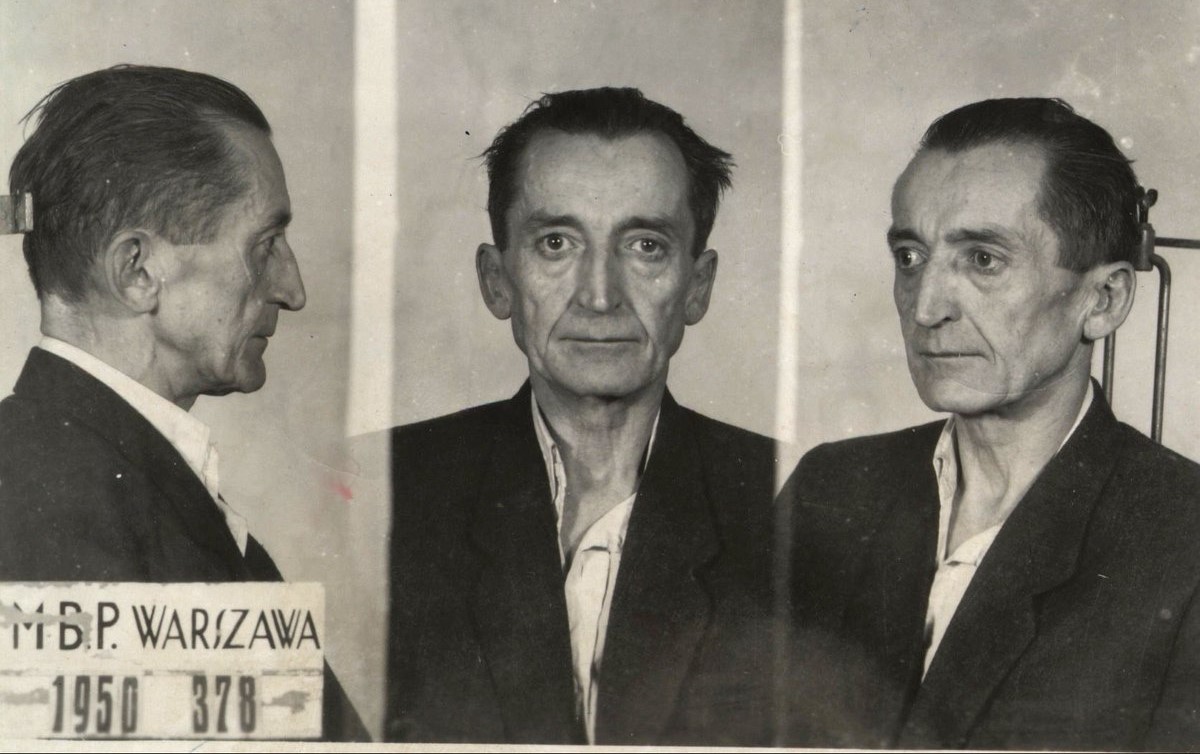
Denying the importance of the role of Jews in the service
of the NKVD is contrary to the basic facts established by
historians. Prof. Andrzej Paczkowski formulated this thesis
as “an over-representation of Jews in the UB.” Unambiguously
writes about the “over-representation of Jews in the UB” by
another leading IPN historian, dr hab. Jan Żaryn in his
study “Wokół pogromu Kieleckiego” (Warsaw 2006, p. 86).
The very unfortunate disproportions resulting from the
excessive number of Jews in the UB were also mentioned by
many more reliable Jewish authors than Gross, for example
Michael Chęciński, a former military information officer of
the Polish People’s Army, in his 1982 book in New York,
Poland. Communism, Nationalism, Anti-semitism ”(pp. 63-64).
The Jewish author of the book “Les Juifs en Pologne et
Solidarność” (“Jews in Poland and Solidarity”) published in
Paris in 1984, Michel Wiewiórka, wrote on p. 122: “The
Ministry of the Interior, especially with the exception of
the minister himself, was departments by the Jews, while
Soviet advisers ensured control of its activities. “
In a number of pages of “Fear” Gross tries to completely
deny from American readers any importance of the role of
Jews in the UB. At the same time, however, the same Gross
completely ignores the significant influences, even the
domination of Jewish communists in other spheres of power,
such as the judiciary, propaganda or the economy. In the
more than 50-page part of the book devoted to “Żydokomuna”,
even one sentence does not mention this to American readers,
cynically keeping them totally ignorant of it.
The role of Jews in the security service, its uniqueness,
consisted not only in excessive numbers, but also in the
fact that many Jewish functionaries of the UB defiled
themselves with examples of extreme cruelty, lack of any
scruples and brutal violations of the law against Polish
political prisoners. It is significant – the ominous role of
the Jewish functionaries is visible in every more
significant crime of the Security Service, from the
genocidal murders in the Świętochłowice camp, through the
court murders of General Fieldorf “Nile” and Captain
Pilecki, to the trial of General Tatar and co-accused of
senior military men.
The main culprits behind the murder of this Polish hero
are, for the most part, Jewish communists. Among them was
the red prosecutor Helena Wolińska (Fajga Mindla-Danielak),
who decided about the unlawful arrest of General Fieldorf,
and later unlawfully prolonged his arrest. The death
sentence for the general in a fabricated trial was issued by
a Jewish communist judge, Maria Gurowska, née Sand, daughter
of Moryc and Frajda née Einseman.
Let us add to this the Jewish origin of three of the four
members of the board of the Supreme Court who approved the
death sentence on the Polish hero (judge Dr. Emil Merz,
judge Gustaw Auscaler and prosecutor Paulina Kern). All
three later lived the last years of their lives in
Israel. Let us also recall that earlier in the trial of the
first instance, Benjamin Wajsblech, one of the most ruthless
prosecutors of Jewish origin, accused General “Nil”. Let us
add that probably Józef Różański himself (Goldberg) handed
the interrogator of General Fieldorf, Lieutenant Kazimierz
Górski, the so-called question marks, ie properly written
sets of questions to be asked by the prisoner (according to
P. Lipiński, The topic of life: wine, “Gazeta Wyborcza”
magazine, November 18, 1994).
In this context, it is worth recalling a fragment of
Sławomir Bilak’s conversation with Maria Fieldorf-Czarska,
the daughter of the murdered general.
She said, among other things: “I am asking why nobody
says that only Jews were involved in my father’s case? I do
not know why the Jews in Poland accused and tried the Polish
citizen ”(quoted after: Temida’s eyes are closed. Nobody
will answer for the death of my father,“ Our Poland ”,
February 24, 1999).
Let us now recall the shameful matter of passing the
death sentence to one of the greatest Polish heroes, Captain
Witold Pilecki, and his execution in 1948. A man who
voluntarily allowed himself to be arrested in order to go to
Auschwitz and investigate the truth about the situation in
the camp, and later became the founder of the first camp
underground. An officer whom the eminent English historian
Michael Foot called “the conscience of Europe fighting
against the Nazis” and one of the most outstanding and brave
figures of the European Resistance Movement. Well – as
Tadeusz M. Płużański wrote about the case of Captain Pilecki
and his co-accused in the trial:
“The sentences were passed earlier,” Józef Goldberg
Różański, the director of the investigative department of
the Ministry of Public Security, issued them. During one of
the interrogations, he told Płużański: “Nothing can save
you. I have two death sentences. They will come, lead them
fucking in the head, and it will be such an ordinary human
death“ (cf. TM Płużański, Prosecutor for special tasks,
”It’s Time“, October 5, 2002).
It is also worth noting that one of the members of the
college of the Supreme Military Court, who on May 3, 1948,
approved the death sentence on Pilecki, executed on May 25,
1948, was Judge Leo Hochberg, son of Saul Szoel (according
to TM Płużański, Lawyers of the Second Polish Republic,
communist criminals, “High Time”, October 27, 2001).
I will omit here a broader account of one of the most
frequently recalled crimes – the genocidal murder of about
1,650 innocent prisoners in less than a year by Salomon
Morel and his Jewish torturers from the UB (see the book by
the author of the very reliable Jewish self-reckoning, John
Sack, entitled “Oko za oko “, Gliwice 1995).
Let me just remind you here of one of S. Morel’s favorite
“games” of the genocidal “executioner from Świętochłowice”,
consisting in setting up pyramids of people who were told to
lie on top of each other in fours. When the pile of bodies
was large enough, he would jump on them to add even more
weight. After such “games”, the people at the top of the
pile came out with broken ribs at best, while the bottom
four ended up in the morgue.
The later crimes committed by Morel against young Polish
political prisoners “re-educated” in the camp in Jaworzno
are much less known. There, Morel replaced Ivan Mordasov as
the commander of the NKVD captain. In Marek J.
Chodakiewicz’s book, “Jews and Poles 1918-1945” (Warsaw
2000, p. 410), we read:
“Between 1945 and 1949, about 10,000 prisoners died in
the camp in Jaworzno.” These terrifying figures sound
unbelievable and require thorough verification, although
Chodakiewicz quotes them after the source work of M. Wyrwich
(“Łagier Jaworzno”, Warsaw 1995).
Various accounts confirm, in any case, the exceptional
cruelty displayed by Commandant Morel towards young Polish
prisoners. Starting with his greeting subsequent transports
of juvenile prisoners with a typical greeting:
“Look at the sun, some people see it for the last
time!” Or with the words: “You are bandits, we will show you
here what it means to fight against the people’s power.”
(Both quotations after the text of the “Open letter to
the Prime Minister of the Republic of Poland” written by
Mieczysław Wieła (“Jaworzniacy” No. 2/29 of February 1999).
In addition to his physical torments, Morel liked to
inflict various mental torments on his victim. For example,
he had him write a thousand times: “I hate Piłsudski”
(according to M. Wyrwich, “Łagier Jaworzno”, Warsaw 1995, p.
90).
The genocidal criminal S. Morel received a Polish pension
– approximately 5,000. PLN.
The leading historian of the Institute of National
Remembrance, dr hab. Jan Żaryn wrote recently:
“The experiences of 1944-1945 only strengthened the
stereotype of Żydokomuna. “The NKVD, with the help of the
remaining Jews, organizes bloody orgies,” reported Władysław
Liniarski “Mścisław”, commander of the AK District in
Białystok in January 1945 to “Polish London” (…).
After the war, Poles, using the slogan “Żydokomuna”, used
the stereotype created by the Jews themselves. Therefore,
Jews became jointly responsible for the suffering of Poles,
including the loss – once again – of state independence.
The families heard the details of the tortures that their
relatives – often soldiers of the independence underground –
were subjected to in the security dungeons. “When I left the
prison, I was immediately taken upstairs and the NKVD
officer Faber [Samuel Faber – footnote by J. Żaryn] (who he
was, I don’t know if he was a Pole or a Russian, certainly a
Jew) (…) ordered me to be tied. They tied my mouth with a
rag and between my arms and legs they put a stick on which
they hung me, and then they started pouring pus into my
nose. After a while, they stopped. I did not lose
consciousness, so I felt everything to the end. I got a
hemorrhage from that (…) ‘, recalled Jakub Górski,’ Jurand
‘, a Home Army soldier (…).
Another activist of the independence underground,
Mieczysław Grygorcewicz, remembered the first days of his
stay in the NKVD and UB arrest in Warsaw:
“(…) At first I did not answer the questions asked by
Józef Światło – the head of the Provincial Security Office,
I was indifferent to all threats and screams, I was overcome
by apathy, I faced a vision of death. After all, I am in the
hands of the enemy, and in the hands of Jews, who were
present in the UB. I felt a great disgust with them, after
all I had to deal with social scum, mostly brought up in the
nalewkowskie gutter ”.
“Józef Światło – a Jew by origin, having a gun in his
hand, told me that if I did not give my place of residence,
he would shoot me in the head (…)”.
The light was brought by Halicki, the head of the
investigative section, who was also a Jew, and he started a
preliminary investigation (…). The UB officers changed
frequently (…). One of them, in particular, spoke to me
brutally and rude, he threatened with the death penalty
without trial. As I learned later from the investigator,
Lieutenant Łojka, it was Józef Różański himself (Józef
Goldberg), deputy Radkiewicz, Minister of Security.
In such a situation and among this group of security
services, I was prepared for the worst, even to be shot (…)
”. (quoted from J. Żaryn, Hierarchy of the Catholic Church
towards Polish-Jewish relations in 1945-1947, in: “Wokół
pogromu Kieleckiego”, Warsaw 2006, pp. 86-88)“.
Let us recall that Józef Różański (Goldberg) mentioned
here, director of the Investigative Department at the
Ministry of Public Security, has earned a well-deserved fame
as the cruelest security officer. From the former Home Army
officer Kazimierz Moczarski, who was one of the victims of
the “infernal investigation” under Różański’s supervision,
we know what the methods of torturing prisoners interrogated
in the Ministry of Public Security were. Among 49 types of
ill-treatment and torture to which he was subjected,
Moczarski mentioned, among others:
“1. hitting specially sensitive areas of the body with a
rubber truncheon (e.g. the bridge of the nose, chin and
mucous glands, protruding parts of the shoulder blades,
etc.);
- beating with a whip, covered in the so-called sticky
gum, the tops of bare feet – a particularly painful
torture operation;
- hitting the heels with a rubber truncheon (a series
of 10 strokes per heel – several times a day);
- plucking hair from the temples and the neck
(so-called goose plucking), from the chin, from the
breast, and from the perineum and genitals;
- crushing fingers between three pencils (…);
- burning a hot cigarette around the mouth and
eyes; (…)
- forcing them to sleep for 7-9 days (…) ”(quoted
after K. Moczarski, Hell’s Investigation,“ Rebirth ”,
January 21, 1989).
The dignitary of the Ministry of Public Security – Józef
Światło supervised the secret prison in Miedzeszyn, where
the methods of extracting testimonies included, among
others, condemning to kneeling on a brick floor with hands
raised for 5 hours, chasing naked through corridors with
simultaneous flogging with steel bars, beating with a club
woven of steel wires (according to T. Grotowicz, Józef
Światło, “Our Poland”, July 22, 1998).
We will not find a single sentence of information about
all these atrocities and crimes of Jewish executioners from
the UB in the books of JT Gross, who wrote so readily and
extensively about the crimes committed by Poles against
Jews.
It is worth recalling that Różański (Goldberg) was
responsible for the operation of a secret group of secret
police murderers who, on his order, secretly murdered
selected Home Army soldiers and people kidnapped from the
street in the forest. This is how, among others, formally
released from custody, Fr. Antoni Dąbrowski was murdered,
former chaplain of the 27th Volhynian Infantry Division of
the Home Army (27th Infantry Division of the Home Army) – a
large infantry unit of the Home Army formed by the forces of
the Volhynia District as part of the Operation “Storm”. In
March 1944, the 27th Infantry Division of the Home Army
numbered about 6,000 soldiers.
Among those murdered after being taken from prison to the
forest were, among others Colonel of the Home Army,
Aleksander Bielecki, from whom the secret police failed to
force the expected testimony, and his wife.
It is worth recalling that the Jewish communist Leon
Kasman, for many years the editor-in-chief of the Central
Committee of the Polish United Workers ‘Party, “Trybuna
Ludu”, was the activist who most vehemently called for
intensifying repression against political opponents during
the session of the Political Bureau of the Central Committee
of the Polish Workers’ Party in October 1944.
He “became famous” by saying: “The horror is overwhelmed
that in this Poland, where the party is a hegemon, not even
one head has fallen” (quoted after P. Lipiński, Bolesław
Niejasny, Magazyn Gazeta Wyborcza, May 3, 2000).
And the heads of Polish patriots, mainly the Home Army
soldiers, began to decline at an accelerated pace as a
result of the first great wave of terror against the nation
that was unleashed at that time.
And so, for example, in December 1944, five Home Army
soldiers were shot in the basement of the house in front of
the Lublin Castle. Their case was handled by a military
prosecutor of Jewish nationality (according to Marek
Kolasiński, a judge of the Court of Appeal in Lublin,
“Report on court murders”, Warsaw 1994, p. 108).
Bright examples of the cruelty of Jewish investigators
towards the interrogated Polish officers can be found in the
so-called the Bydgoszcz case.
Jerzy Poksiński described, for example, how
“Capt. Mateusz Frydman grabbed the interrogated officers by
the throat and beat their head against the walls, he said to
Major Krzysik:
“I will shoot you and I will tomb you, so that Anders
cannot erect a monument” (see J. Poksiński, “TUN. Tatar –
Utnik – Nowicki”, Warsaw 1992, p. 38).
In the Bydgoszcz case, Colonel Józef Meksz died
martyred. In the course of another fabricated case of
innocent officers, the so-called of the Zamość-Bydgoszcz
affair, Colonel Julian Załęski, tortured in prison, died. He
lost his life as a victim of cruel tortures ordered by one
of the most ruthless Jewish torturers – the head of the Main
Information Board of the Polish Army, Col. Stefan Kuhl,
known as the “bloody Kuhl” (see AK Kunert – J. Poksiński,
Col. Stefan Kuhl, “Życie Warszawy”, February 24, 1993).
Director of the Department of the 5th Ministry of Public
Security, a Jewish communist, Luna Brystygierowa,
specializing in the persecution of the Catholic Church and
patriotic intelligentsia, was called “Blood Luna” because of
the extreme ruthlessness with which she interrogated
prisoners. A soldier of the Home Army and former political
prisoner Anna Rószkiewicz-Litwinowiczowa wrote in her
memoirs that:
Julia Brystygierowa was famous for the sadistic torture
inflicted on young prisoners. During the interrogations in
Lviv, she put the prisoners’ genitals into a drawer,
slamming it sharply. She was sexually perverted, and here
she had a chance to show off ”(see A.
Rószkiewicz-Litwinowiczowa, Difficult decisions.
Counter-intelligence of the Home Army Warsaw District
1943-1944. Prison 1949-1954, Warsaw 1991, p. 106).
One of the most disgraceful cases was the arrest in 1947,
on the basis of fabricated accusations, of Major Mieczysław
Słaby, a former Westerplatian physician, the most famous
heroic formation of the Polish defense war of 1939.
After only a few months of interrogation, Major Słaby
died at the age of only 42 as a result of injuries sustained
during the investigation. His case was handled by the deputy
prosecutor Major S.D. Mojsezon (Mojżeszowicz), a Jew by
origin.
He wrote, in his own hand, the alleged “testimony” of
Major Słaby. Weak Słaby, admitted that he “acted to the
detriment of the Polish state”. He was persuaded with
appropriate methods to sign the testimony formulated by
prosecutor Mojsezon. The tortured major died before being
convicted and sentenced.
Another example is the case of the behind-the-scenes
death in the building of the Ministry of Public Security of
one of the heroes of the book by Aleksander Kamiński from
the “Zośka” battalion – Jan Rodowicz pseud. “Anoda”. The
investigation of his death was canceled twice (in 1949 and
1994).
He was one of the characters famous for his incredible
courage, dedication and the ability to take risks. For his
military merits, he was awarded the Cross of Valor (twice)
and the Virtuti Militari Cross.
A multi-talented student, he studied at the Faculty of
Architecture of the Warsaw University of Technology when he
fell victim to repression. He was arrested on Christmas Eve
1948 and taken to the secret police office. His
interrogations were led by the head of the 5th Department of
the Ministry of Public Security, Major of Jewish origin
Wiktor Herer (later a professor of economics).
Only two weeks after the arrest, the legendary “Anoda”
was killed in the building of the Ministry of Public
Security. From the information submitted to the prosecutor’s
office by another member of the “Zośka” battalion,
imprisoned at the same time as “Anoda”, Rodowicz was shot by
Bronisław K. from the Ministry of Public Security.
Former MBP chief Wiktor Herer denied the allegation of
the murder of “Anoda.” He upheld the old official version
that “Anoda” committed suicide by jumping on the sill of an
open window and jumping from the fourth floor.
This version seems quite unlikely, if only because it was
the middle of winter then – on January 7, 1949. So how to
explain the claim that at that time there was an open window
in the MBP building on the fourth floor?
Generally, the numerous crimes committed in various
provinces under the command and command of local Jewish
security service officers are still insufficiently known. A
typical example in this respect is the case of crimes
against 16 Poles – demobilized soldiers of the Home Army and
NSZ, committed in Siedlce on April 12 and 13, 1945.
In the course of prosecution proceedings in the 1990s, it
was unquestionably proven that the murder was committed by
employees of the County Public Security Office in
Siedlce. At the time of the crime, the head of the then UB
in Siedlce was Lieutenant Edward Słowik, an officer of
Jewish nationality who had Major Timoshenko as his “adviser”
to the NKVD officer.
At the time of the crime, out of about 50 employees of
the then Siedlce UB, about 20 were of Jewish
nationality. According to historian Marek J. Chodakiewicz,
most of the participants of the kidnappings and murders of
16 former soldiers of the independence underground in
Siedlce, including Braun (Bronek) Blumsztajn and Hersz
Blumsztajn, were transferred to other places on duty (cf. MJ
Chodakiewicz, op. Cit., P. 466).
Among the criminal investigation officers of Jewish
origin, it is worth mentioning separately Major (Izaak)
Ignacy Maciechowski, deputy head of Department IV of the GZI
in 1949-1951. According to the Mazur’s commission report, he
was conducting an investigation against General Tatar,
Col. Uziębło, Col. Sidorski, Col. Barbasiewicz,
Col. Jurkowski and Maj. Wacek using very brutal
interrogation methods. Several of the officers tortured by
Maciechowski, after pleading guilty, were sentenced to death
by Stalinist courts, Colonel Ścibor, Colonel Barbasiewicz
and Colonel Sidorski (see T. Grotowicz, Ignacy Maciechowski,
“Our Poland” of February 10, 1999).
A separate, extensive topic, which I present briefly
here, is the case of numerous responsible judges of Jewish
origin, such as the aforementioned prosecutor Helena
Wolińska (Fajga Mindla-Danielak) or judge Maria Gurowska.
Let us list here, among others such people as the deputy
prosecutor general of the People’s Republic of Poland,
Henryk Podlaski, the deputy head of the Supreme Military
Court and the head of the Military Board, Oskar Szyja
Karliner (he led to such a management of positions in this
board by officers of Jewish origin that this institution was
maliciously called the “Chief Rabbinate of the Polish Army”)
, the head of the Main Information Board of the Polish Army,
Col. Stefan Kuhl, prosecutor Benjamin Wajsblech, judge
Stefan Michnik, Lt. Filip Barski (Badner), Capt. Franciszek
Kapczuk (Nataniela Trau), prosecutor Henryk Holder, judge of
the Supreme Military Court Marcin Danzig, judge Col. Zygmunt
Wizelberg, judge Aleksander Warecki (Weishaupt), prosecutor
Col. Kazimierz Graff, Judge Emil Merz, Col. Józef Feldman,
Col. Maksymilian Lityński, Col. Marian Frenkel, Col. Naum
Lewandowski, prosecutors in the General Prosecutor’s Office:
Benedykt Jodelis, Paulina Kern, Col. Feliks Aspis,
Col. Eugeniusz Landsberg.
It is enough to recall that in 1968 alone, about 1,000
people left the former government apparatus, disgraced by
their participation in the secret services of the UB,
etc. (according to information provided on March 12, 1993 in
a television broadcast by Colonel J. Poksiński, an
outstanding researcher of recent history).
And let us remind you that some of the Jewish security
service officers and murderers, the most discredited by the
actions of the terror apparatus, left Poland earlier, in the
first years after 1956. Let us compare these data with JT
Gross, who tried to diminish the role of Jews in the
repression apparatus, writing remarks about “a few dozens of
Jews “,” acting as Stalin’s henchmen. “
I will only briefly mention a few less luminous figures
from the judiciary. Among the most ruthless prosecutors of
Jewish origin was Kazimierz Graff, son of the merchant
Maurycy Graff and teacher Gustawa Simoberg, former chairman
of the Warsaw Academic Antigett Committee in 1937-1938.
On February 26, 1946, as the vice-prosecutor of the
Emergency Cases Department of the District Court in Siedlce,
during an away session in Sokołów Podlaski, he sentenced 10
Home Army soldiers to death.
The very next day, Graff ordered the execution of
convicted Home Army soldiers “so that they would not have
time to submit a plea for pardon, which they were entitled
to by law” (according to: TM Płużański, “The case of
prosecutor Graff”, “High Time”, 6 July 2002).
Thanks to his ruthlessness, after a series of court
murders, Graff was quickly promoted to the rank of Deputy
Chief Military Prosecutor in the rank of colonel. He was the
main prosecutor in the case of the Polish Underground Army
commanded by Cpt. Stanisław Sojczyński “Warszyca”, leading
to the death sentences against “Warszyca” and a number of
other co-accused.
The Main Commission for the Investigation of Crimes
against the Polish Nation established that “there was a
judicial murder in this case” (cf. ibid.). Graff “became
famous”, among others as a co-author of the indictment in
the fabricated trial of General S. Tatar and other senior
soldiers, which was to discover a “conspiracy in the army”
(cf. ibid.).
However, the indictment prepared by him was considered to
contain many accusations “too naive” and had to be processed
by two more experienced than Graff specialists from
Stalinist investigations – A. Fejgin and J. Różański.
The court murderer Stefan Michnik, brother of the current
editor-in-chief of “Gazeta Wyborcza” Adam Michnik, was
immediately promoted at the age of only 27 to the rank of
captain, even though he did not have a high school diploma.
He “deserved” such his zeal in fabricated political
trials. As a second lieutenant, he was a judge in the
fabricated trials of Maj. Zefiryn Machalla, Col. Maksymilian
Chojecki, Maj. Jerzy Lewandowski, Col. Stanisław Wecki,
Maj. Zenon Tarasiewicz, Lt. Romuald Sidorski, Lt. Alexander
Kowalski.
Stefan Michnik sentenced Maj. Z. Machalla to death at the
age of 37, who was executed on January 10, 1952 (he was
rehabilitated posthumously on May 4, 1956).
On December 8, 1954, Col. Stanisław Wecki, who was
sentenced by Michnik to a 13-year prison sentence, died less
than a month after his interruption in the execution of the
prison sentence. Fortunately, the death sentences were not
carried out on Col. M. Chojecki and Maj. J. Lewandowski.
sentenced to death by S. Michnik.
In 1951 Major Karol Sęk was executed on the basis of the
sentence of S. Michnik (in the trial of NSZ Podlasie – the
crime was completely unknown.
This is how Stefan Michnik sentenced NSZ soldiers to
death.
Karol Sęk is one of the most beautiful patriotic
cards. At the age of 16, he broke the German emblem, and
later participated in the Polish-Bolshevik war. During World
War II, a prisoner of Majdanek, a soldier of NOW and
NSZ. Life for Poland was interrupted on June 7, 1952 by the
decision of Stefan Michnik, brother of Adam Michnik. Karol
Sęk was murdered in prison.
In the same trial of the Podlasie NSZ, Stefan Michnik
issued two more death sentences: one was carried out (on
Stanisław Okuniński), another (on Tadeusz Moniuszko) was
commuted to life imprisonment. In Życie from February 11,
1999, it was stated that, according to the editorial staff,
S. Michnik had handed down about 20 death sentences in
political trials.
Prof. Witold Kulesza, the then head of the investigative
department of the Institute of National Remembrance, loudly
announced that the Institute of National Remembrance would
demand the extradition of Stefan Michnik.
I wonder what these reasons (was it the concern not to
weaken Adam Michnik’s “authority”?) made them withdraw from
this announcement? It is worth asking why the authorities of
the Institute of National Remembrance lacked elementary
honesty and courage to publicly inform about the reasons for
withdrawing from the announced demands for the extradition
of S. Michnik?
Among other court murderers it is worth mentioning, among
others about the case of the head of the Military
Prosecutor’s Office in Warsaw, Col. Eugeniusz Landsberg. He
was saved by Poles during the war thanks to the shelter
given to him by the Catholic Church. He repaid for them with
numerous death sentences on Polish patriots in fabricated
political trials.
For the Stalinist Soviet dignitaries in charge of matters
in Poland, Stalinist Soviet dignitaries who were in charge
of matters in Poland, the best guarantee of determination in
the fight against Polish patriots from the independence
underground. And in this respect, they were not
disappointed.
Among Jewish security officers, judges and prosecutors,
there was a particularly large number of the most inexorable
“conquerors” of the Polish Home Army underground, ready to
construct the most absurd accusations against him.
Typical in this respect was Judge Dawid Rozenfeld, who
justified the sentence which sentenced only to life
imprisonment a Gestapo agent guilty of denunciation and
death of many soldiers and officers of the Home Army,
complicit in handing over to the Gestapo General Stefan
Rowecki “Grot”. As a mitigating circumstance, Judge
Rozenfeld considered in the case of this agent the
following:
”According to the Provincial Court, the accused is a
victim of the criminal activity of the Home Army leadership,
which, as we know now, cooperated with the Gestapo, served
the Gestapo, and together with the Gestapo fought against
the greater part of the Polish nation in its struggle for
national and social liberation” (quoted in: J. Piłek,
Stalinists are among us, in: Gazeta Polska, August 4, 1994).
ADWO – HANGERS
Let us add to the above descriptions the role of some
lawyers of Jewish origin. A special type of “defender” in
political trials was represented, for example, by the lawyer
of Jewish origin, Mieczysław (Mojżesz) Maślanko. He
“defended” his charges in such a way that he compared
Moczarski’s group to the Gestapo and the Abwehr, claiming
that ” all these institutions were established by having
classes who want to stay the wheel of history ” (according
to: TM Płużański, Advocacy, in: “The Highest Time “, January
26, 2003).
In a similar way, Maślanko “defended” – accusing the head
of the 2nd Main Directorate of WiN Col. Franciszek
Niepokólczycki, the famous “Łupaszka”, that is Maj. Zygmunt
Szendzielarz, commander of the 5th Vilnius Brigade of the
Home Army, nationalist Adam Doboszyński, Captain Witold
Pilecki and co-defendants, General August Emil Fieldorf
“Nil” (Maślanko agreed with most of the alleged evidence of
“guilt” of gen. “Nil”).
According to the last delegate of the Government in
London to Poland, Stefan Korboński, in the case of Pilecki
and his co-defendants, “Różański made the case clear: the
duty of the council of defense lawyers (chaired by Maślanko
– footnote by TM Płużański) is to gather evidence against
the accused” (cf. ibid.).
The unworthy behavior of M. Maślanko, who did everything
to drown the accused whom he was supposed to defend, was all
the more outrageous as he himself was saved from death in
Oświęcim by the famous nationalist Jan Mosdorf.
A “defender” similar to Maślanko, or rather an “attorney”
in political matters, was another lawyer of Jewish origin,
working in a joint law office with Maślanko – Edward
Rettinger.
He ‘defended’ Moczarski and his colleagues with the
words: ‘(…) it was a mess of crime whose miasms still poison
our souls today.
It was a puddle of crime, in which the frozen blood still
sticks to the hands ”( cf. ibid.). Another such
pseudo-defender was Marian Rozenblitt, who was already
active in the judiciary of the Polish army in the USSR.
Gestapo and SB confidants were active in Kraków,
including Jewish lawyers Maurycy Wiener and Karol
Buczyński. The provincial prosecutor in Kraków was Rek, and
his deputies were Gołda, Józef Skwierawski, and Krystyna
Pałkówna. They acted jointly and in agreement with attorneys
Wiener and Buczyński, discontinuing the investigations of
common bandits for heavy money. The rich thugs were
“recommended” by Bruno Miecugow, father of Grzegorz
Miecugow, TVN journalist. Bruno Miecugow, as a signatory of
the shameful list of 53 writers on the death sentences in
the trial of the “Krakow Curia”, sent with the help of a
Jewish doctor M. Orwid (psychiatry) to the Krakow’s
Kobierzyn (psychiatric hospital) of the great Polish
architect and patriot Wiesław Zgrzebnicki (“Zgrzesia”) for
publicly condemning the signature of Bruno Miecugow in the
shame of 53 Krakow writers in the Krakow Journalists’ Club
“Pod Gruszką”. The disgrace “53” was also signed by, among
others Wisława Szymborska and Sławomir Mrożek, from the
decision of Card. Stanisław Dziwisz, buried in the National
Pantheon in the crypt under the Church of St. Peter and Paul
in Krakow.
Wiesław Zgrzebnicki, tormented by the female psychiatrist
from Kraków, died at the age of 40.
A Krakow doctor, Ewa Hołowiecka, the secretary of the
Polish United Workers’ Party at the Medical Academy of
Krakow was appointed to help Bruno Miecugow.
War crimes should be recalled:
Crime in Naliboki – massacre of Polish inhabitants of the
village of Naliboki committed by units of Soviet and Jewish
partisans on May 8, 1943 under the command of Paweł Gulewicz
from the Brigade of Stalin, including a group consisting of
people of Jewish nationality (it is being determined whether
it was part of the unit under the command of Tevye Bielski
or Sholem Zorin). http://www.bibula.com/?p=2061
Tewje Bielski or Tuwia Bielski and Anatol Bielski (born
May 8, 1906 in Stankiewiczy near Nowogródek, died 1987 in
New York) – Polish Jews, creators (together with three
brothers) and commanders of the Jewish partisan unit in the
Nabolicka forests during World War II .
The church, school, post office, fire station and some
residential houses were burned down, the rest of the
settlement was plundered. Several attackers were also
killed. According to Soviet sources, the number of Poles
killed was estimated at 250; on August 6, 1943, the village
was again pacified, this time by German troops as part of
the so-called “Operation Hermann”, and its inhabitants were
deported deep into the Reich for forced labor.
Crime in Koniuchy – the mass murder of at least 38 Polish
inhabitants (men, women and children; the youngest was 2
years old) of the village of Koniuchy (today in the
Lithuanian state, formerly in the Second Polish Republic in
the Nowogródek voivodeship, Lidzki poviat) committed on
January 29, 1944 by Soviet partisans (Russians and
Lithuanians) and Jewish.
During the pogrom, most of the houses in the village were
burnt, apart from the murdered, at least a dozen or so
inhabitants were injured, and at least one of them later
died of wounds. Before the attack, the village was inhabited
by about 300 Polish inhabitants, there were about 60
buildings in it. Previously, Soviet partisans often
commandeered food, clothes and cattle from the villagers,
which is why the local inhabitants set up a small volunteer
self-defense unit.
The Institute of National Remembrance is investigating
the case of the Koniuchy massacre. So far it has been
established that the attack was carried out by Soviet
partisan units stationed in the Rudnicka Forest: “Death to
the Fascists” and “Margirio”, which are part of the Vilnius
Brigade of the Lithuanian Guerrilla Movement, and “Death to
the Occupant”, part of the Kaunas Brigade.
These units included Russians and Lithuanians, most of
the “Death to the Occupant” unit was made up of Jews and Red
Army soldiers escaping from POW camps. The Jewish unit
consisted of 50 people, and the Russian-Lithuanian units –
about 70 people. The commanders were Jakub Penner and Samuel
Kaplinsky.
According to one of the attackers, Chaim Lazar, the aim
of the operation was to kill the entire population,
including children, as an example to intimidate the rest of
the villages. According to the findings of the Canadian
Polish Congress, which were the basis for the initiation of
the investigation, the number of dead was greater (approx.
130).
The attack on Koniuchy and the murder of the local
civilian population was the largest of a series of similar
actions carried out in 1943 and 1944 by Soviet and Jewish
partisans in the Rudnicka and Nalibocka forests (e.g. the
massacre of the population in the town of Naliboki).
In May 2004, a monument commemorating the victims was
unveiled in Koniuchy, with 34 established names of the
victims.
In post-war studies, based on, inter alia, Jewish
accounts of participants in the attack on the countryside
(eg Izaak Chaim and Chaim Lazar) often provided information
about the murder of all 300 inhabitants, as well as about
fights with a unit of German soldiers (in other sources of
the Lithuanian police).
However, later studies did not confirm the presence of
Germans or policemen in the village, and also questioned the
thesis that all inhabitants of the village had died (some of
the inhabitants escaped from the massacre and survived the
war). Information stating that all Polish inhabitants of the
village of Koniuchy were murdered also appeared in the
reports of the structures of the Polish Underground State at
that time.
Documents, sources, citations:
prof. Jerzy Robert Nowak, (“Nasz Dziennik”, August 18,
2006)
http://pantarhei.type.pl/1712/zydowscy-kaci-w-powojennej-polsce/
http://dakowski.pl//index.php?option=com_content&task=view&id=10450&Itemid=53
http://www.wicipolskie.org/index.php?option=com_content&task=view&id=9400&Itemid=56
Author Aleksander Szumański
http://aleksanderszumanski.pl/index.php?option=com_content&task=view&id=1103&Itemid=2
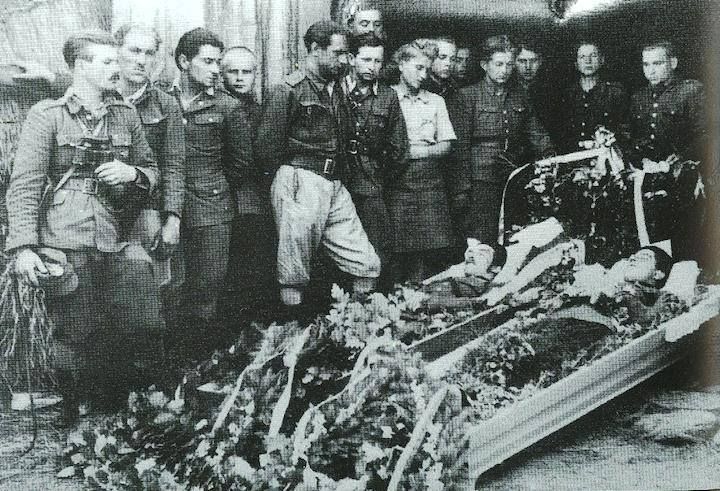
Abram Tauber
This is unknown history that is hidden away and will
never be talked about openly and surely this is not the only
account of betrayal, but it just doesn’t fit the current
narrative, but it’s vital that in the face of lies
especially in the face of anti-Polish hatred we respond with
true stories of how some Jews treated Poles.
True Polish history: Polish heroes risk their lives to
save a Jew. The Soviets invade and then the Jew collaborates
with the Soviets murdering Poles.
Polish-Jewish relationships often had nothing to do with
“antisemitism” and everything to do with treason and
self-preservation.
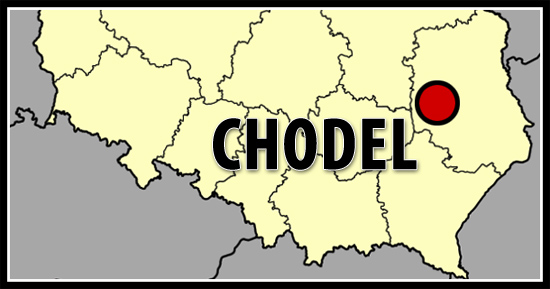
niewygodne.info.pl
The story of Abram Tauber – a Jew rescued by the Home
Army who after the war became the head of the Security
Service in Chodel.
This story shows that in the case of Polish-Jewish relations
– especially in the post-war period – there can be no
simple, zero-one narrative. Just as there were bad Poles
surrendering hiding Jews to Germany, so were the hiding
Poles murdered by communist torturers, the majority of whom
were Jews. Abram Tauber was hidden by Home Army soldiers
during the war. When the Soviet army appeared in the
vicinity of Lublin, he came to their side. Soon after, he
became the head of the UB in Chodel and personally murdered
4 Home Army soldiers.
Abram Tauber, due to his Jewish origin, did not have an easy
life under German occupation. He had to hide. He was
assisted in this by the Home Army soldiers under the command
of Major Hieronim Dekutowski (aka “Zapora”). Many times he
could count on shelter in locations controlled by
the “Zaporczyk”.
In the second half of 1944, when Soviet soldierscaptured the
Lublin region, Tauber decided to go to their side. He
decided that the threat to his life would be much smaller
when he got to the areas from which Germany was driven out.
At the beginning of 1945, Tauber was appointed commander of
the MO post and head of the UB in Chodel. As the head of
this communist unit, he contacted four Home Army soldiers
whom he knew from the period of hiding from the Germans (one
of them was to save him directly). These soldiers went to
the meeting completely voluntarily and without weapons. It
is possible that they were convinced that Tauber, who had
been saved by them earlier, would want to repay them
somehow, put vodka or give some good advice on the new
reality.
What turned out in reality? The meeting with Tauber was a
classic UB ambush. Tauber ordered them to be tied up with
barbed wire first and then shot them all personally.
Upon hearing the news, Hieronim Dekutowski (“The
Firewall”) decided to return to the underground. He
organized a group of several dozen Polish soldiers and – as
a revenge for Tauber’s deed – on the night of February 5-6,
1945, he broke the MO / UB police station in Chodel. The
Dekutowski group did not find Tauber, however. According to
the account of one of the “zaporczyki” by Stanisław Wnuk
(aka “Opal”). Tauber was soon transferred to the Szczecin
UB. Finally, he was supposed to emigrate to Israel.
I put this “pebble in the garden” to show that – contrary to
what the Yad Vashem Institute claims – the history of
anti-Semitism and anti-Polonism can sometimes intertwine and
intertwine. Abram Tauber was undoubtedly a victim of Nazi
Germany’s anti-Semitic policy. However, as soon as the
opportunity arose, he became an officer of the criminal
regime for which the enemy number 1 was Poles fighting for
freedom.
Source: Hieronim
Dekutowski “Zapora” (Historycy.org)
Source: Justice
system of the anti-communist armed underground at the AK-WiN
Lublin Inspectorate 1945-1947 (bibliotacyfrowa.pl)
Source: Hieronim
Dekutowski (Wikipedia)
niewygodne.info.pl
an inconvenient blog for the establishment of the Third
Polish Republic